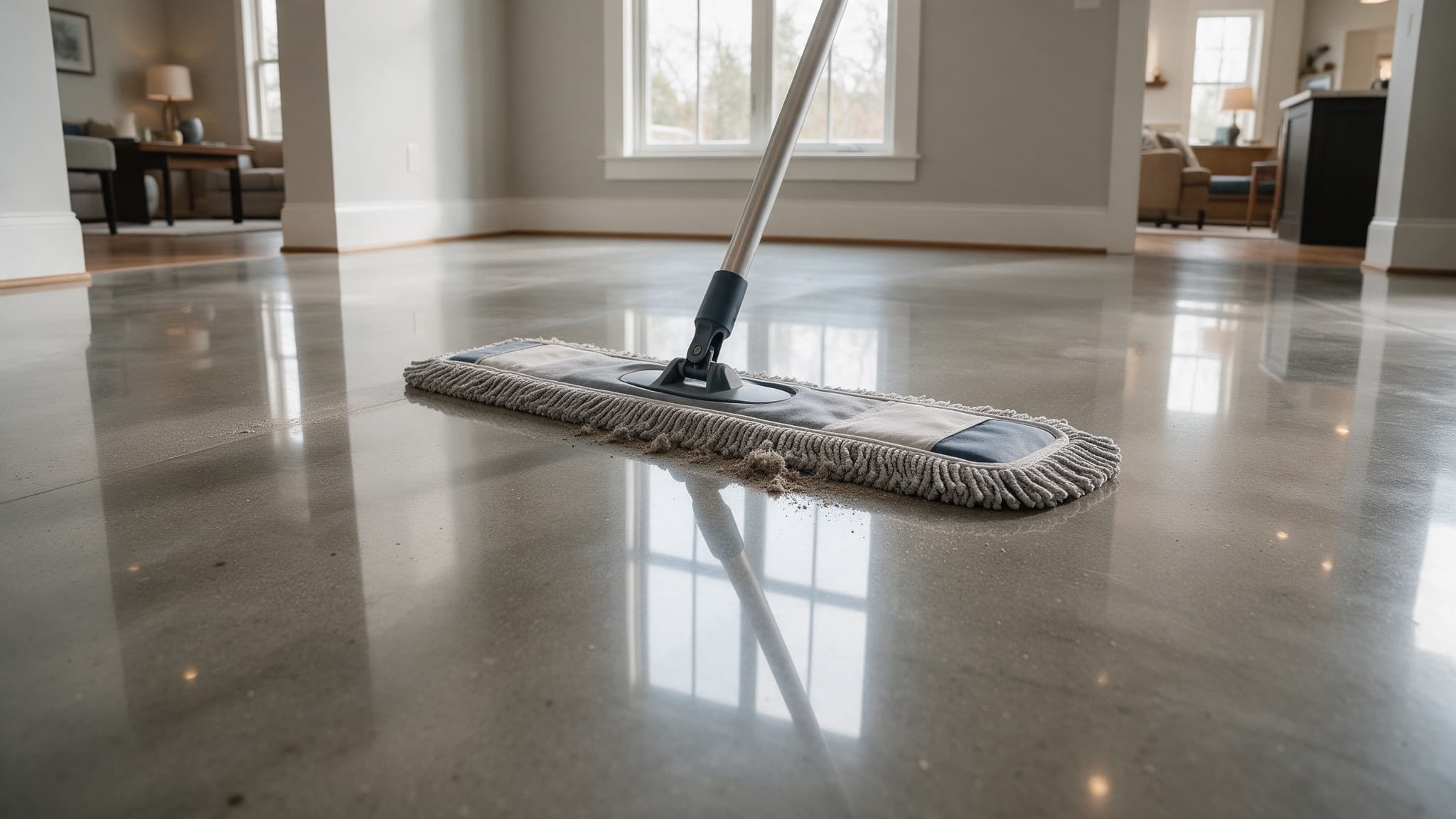
Dust mop, clean neutral, burnish periodically, reapply guard. Polished concrete gets its reflectivity from a mechanically refined surface rather than from a coating, so maintenance is about preventing fine scratching rather than protecting a film. In a Charlotte home that means weekly dust mopping and burnishing once or twice a year. There is no recoat cycle to budget for.
The Realistic Schedule
| Task | Residential | Commercial | Why |
|---|---|---|---|
| Dust mop | Weekly | Daily | Removes grit before it scratches |
| Neutral wet clean | Monthly | Weekly | Lifts film and residue |
| Burnish | 1–2× per year | Monthly to quarterly | Restores clarity, removes nothing |
| Reapply guard | Annually | Quarterly | Stain resistance and burnish response |
| Re-polish | 10+ years | 5–10 years | Only when burnishing stops working |
Commercial burnishing runs roughly $0.15–0.40 per square foot per visit. Re-polishing is priced closer to the original $4–10 installation rate.
Burnishing Is Not Re-Polishing
These get conflated constantly, including in quotes, and the price difference is an order of magnitude. Burnishing runs a high speed machine with a soft pad across the surface. The friction heats and realigns the very top of the floor, restoring clarity. It removes no material and can be repeated indefinitely.
Re-polishing means going back in with diamond tooling and grinding through a grit progression again. It removes material, it is disruptive, and a properly maintained floor should not need it for a decade or more. If someone proposes re-polishing a five-year-old floor that has simply gone dull, ask why burnishing was not tried first.
The distinction matters for budgeting a commercial floor. A maintenance contract with quarterly burnishing at a few tenths of a dollar per square foot is inexpensive and defers the large expense almost indefinitely. Skipping it does not save money, it converts a small recurring cost into a large one later.
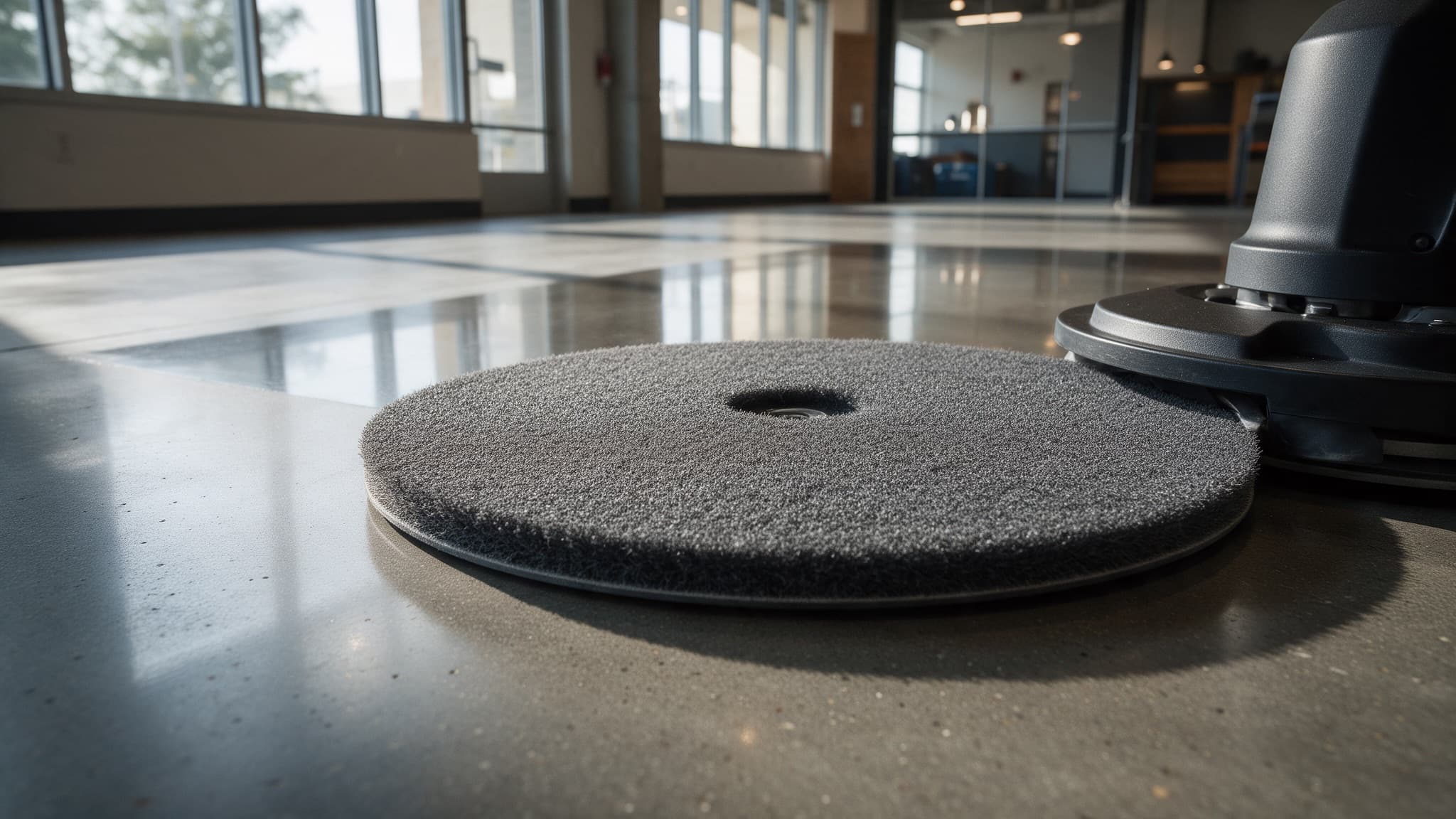
A burnisher restores clarity without removing material. Re-polishing with diamond tooling is a different and far larger job
The Honest Weakness: Staining
Polished concrete has no barrier film. Densifier hardens and tightens the surface, which slows absorption considerably, but oil, wine, coffee, and pet accidents will mark it if given time to soak in. A polish guard improves resistance and does not eliminate the issue.
Most stains lift with a poultice drawn out over several hours, particularly if addressed within a day. What does not lift is acid damage, which is not a stain but localised etching of the surface itself. A spilled bathroom cleaner or a dropped bottle of vinegar leaves a dull patch that only re-polishing corrects, which is why neutral cleaners are non-negotiable on this floor type.
In a Charlotte kitchen or entryway where staining is a genuine concern, that is worth weighing at specification time rather than after. It is one of the clearest cases where a resin coating is the better answer despite polished concrete being the more durable surface underfoot.
Floor lost its reflectivity? In most cases that is a burnishing job rather than a re-polish, and we will say so even though the smaller job is worth less to us. Free assessment across the Charlotte metro.
Get Free EstimateFrequently Asked Questions
Related Guides
Share this guide: