Concrete Staining
and Dye in
Charlotte, NC
Rich Color. Permanent Finish. No Paint to Peel.
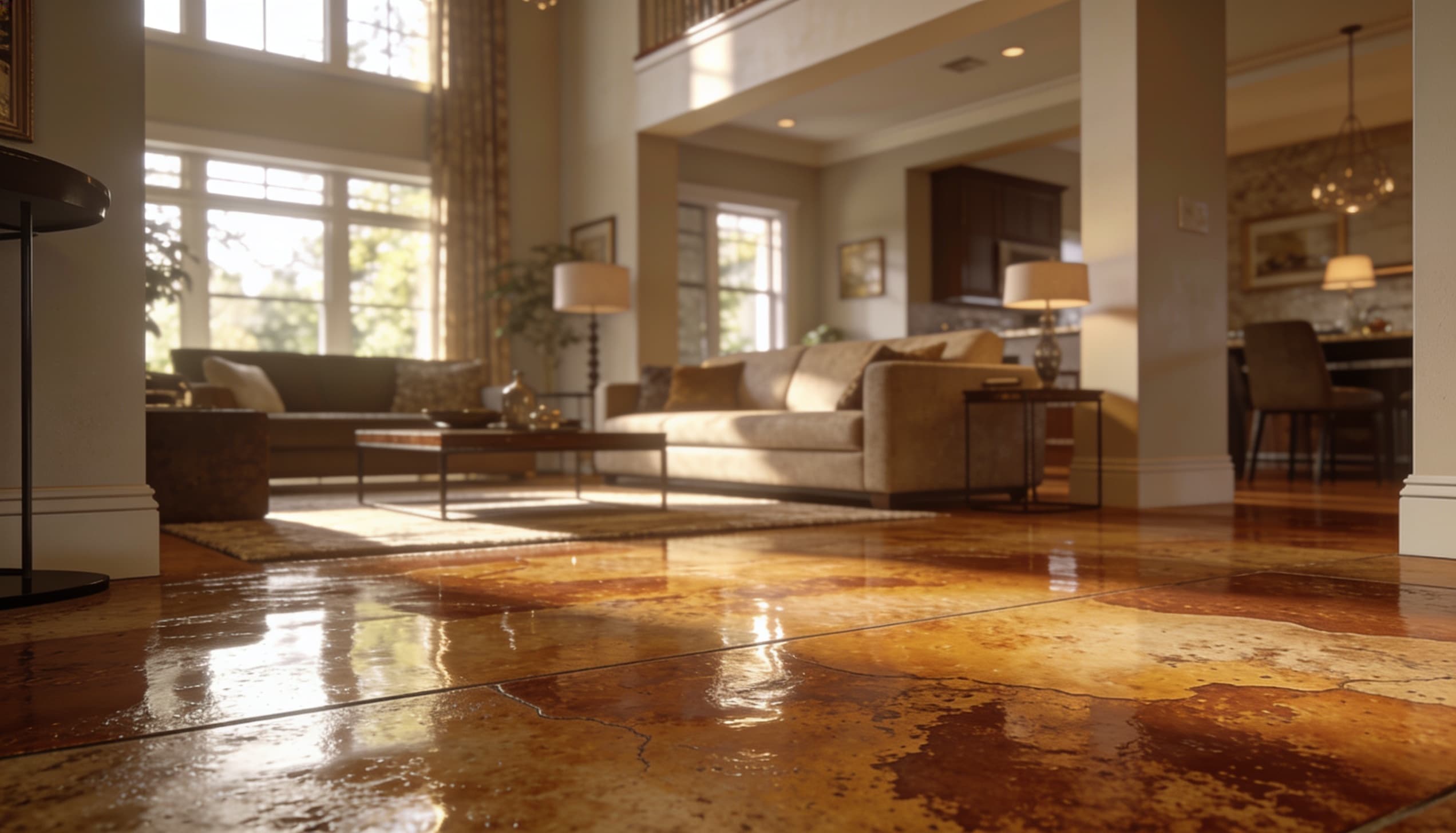
Concrete staining and dyeing transforms an ordinary slab into a decorative surface with depth, variation, and color that paint and coatings can't replicate. Unlike epoxy, stain and dye penetrate the concrete — they can't peel because they become part of the slab itself. Charlotte Epoxy Pro installs acid stain, water-based dye, and decorative concrete systems for residential and commercial floors across the Charlotte metro.
Acid Stain vs Water-Based Dye
vs Decorative Coatings
Acid Stain
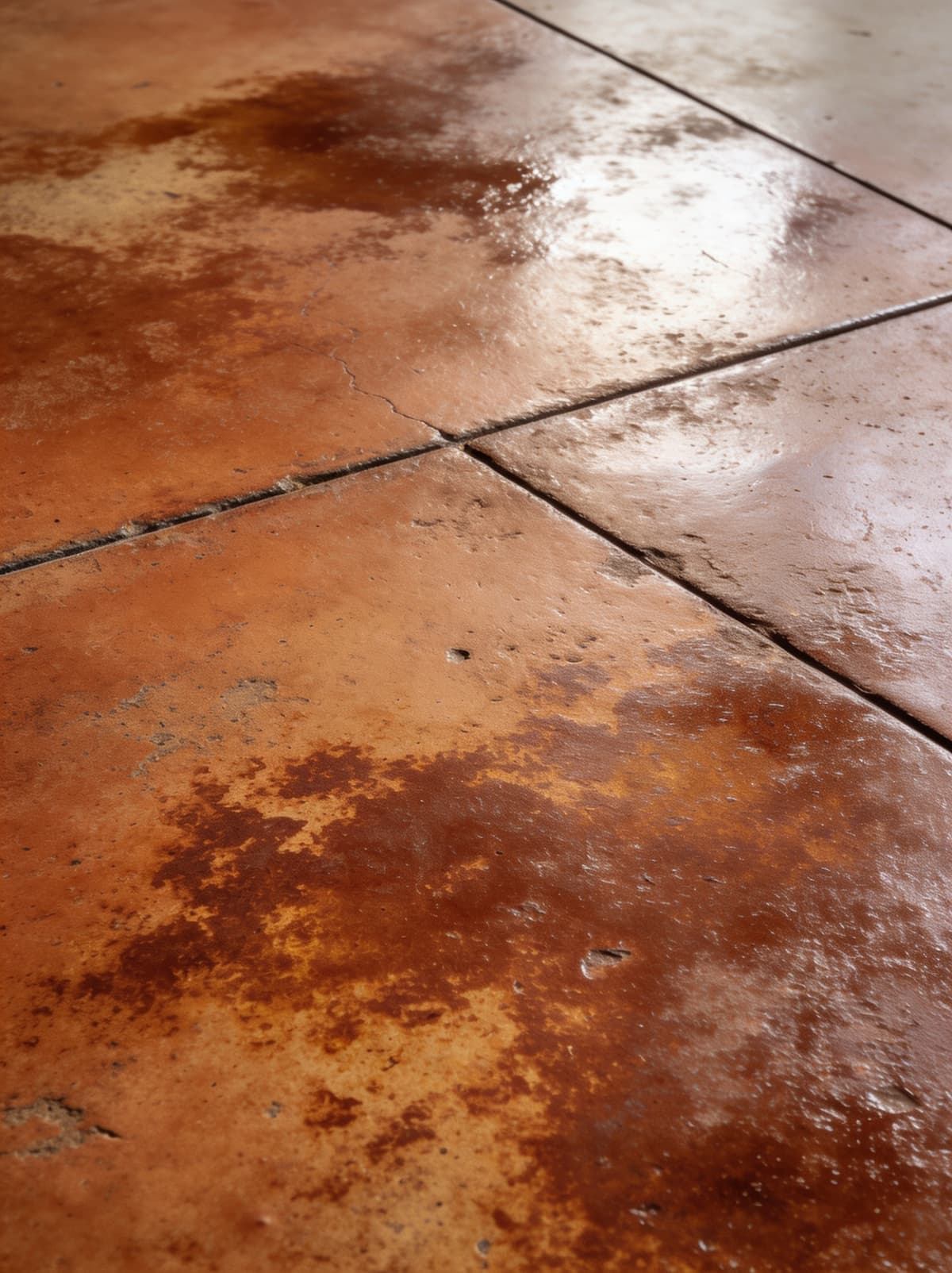
Acid stain uses a chemical reaction between the stain solution and minerals in the concrete. The result is a mottled, variegated surface — no two floors look identical. Warm earth tones dominate: amber, brown, terracotta, walnut, sage. The effect is permanent and cannot be removed once the reaction is complete. Best for: residential floors, patios, driveways where a natural stone-like look is the goal.
Water-Based Concrete Dye
Water-based dyes penetrate the slab without a chemical reaction, giving more predictable, consistent color than acid stain. Available in a broader range including blues, greys, blacks, and translucent blends. More controllable than acid stain — better for commercial spaces where a consistent color across a large area is required.
Decorative Concrete Coatings
Concrete overlays and micro-toppings go on top of the slab — similar to epoxy in application but typically thinner and more trowel-applied. They allow pattern, texture, and color not achievable with stain or dye. Charlotte Epoxy Pro uses overlay systems where the existing slab isn't a candidate for staining (too much contamination, previous sealers, etc).
What We Install
- Acid stain — permanent, cannot peel or chip
- Dye — consistent color, broader palette
- Overlay — when the slab needs a new surface layer
- All systems sealed with penetrating or wet-look sealer
- UV-stable topcoat on exterior and sun-exposed surfaces
- Suitable for interior, exterior, garage, basement, commercial
Where Stained Concrete Works Best
Residential Interiors
Living rooms, kitchens, entryways, and finished basements where homeowners want a distinctive decorative floor. Acid stain's mottled look suits natural, earthy, and rustic interior styles. Dye suits modern and contemporary interiors with more color control.
Patios and Exterior Concrete
Exterior concrete patios, driveways, and pool surrounds. Must use UV-stable penetrating sealer and reapply every 2–5 years on exterior surfaces. Acid stain is popular for patios where the natural variation suits outdoor aesthetics.
Commercial Retail and Restaurants
Retail floors, cafe interiors, and restaurant dining areas where a decorative floor contributes to brand identity. Water-based dye gives commercial clients predictable color consistency across 1,000–5,000+ sqft.
Garages (Limited Use)
Acid stain works in garages but is less practical than epoxy for vehicle traffic — it's more vulnerable to oil and chemical staining without a robust topcoat. For most Charlotte garages we recommend epoxy or polyaspartic over stain unless the decorative aesthetic is the primary goal.
Garage floor coatings →Color and Finish Options
Acid stain palette is limited to earth tones — the chemistry produces warm natural colors, not vivid or cool tones. Most popular Charlotte installs: walnut brown, colonial amber, saltillo terracotta, English red, hunter green. Water-based dye expands into grey, black, blue, and translucent white wash for a broader design palette.
Finish options range from matte penetrating sealer (most natural look, lowest sheen), to wet-look sealer (moderate gloss, enhances color depth), to high-gloss topcoat (maximum protection and sheen, most similar to an epoxy finish). We bring stain samples and sealed chips to the free estimate so you can compare finishes before committing.
Process and Sealing
Concrete condition, existing sealers, contamination, and prior coatings assessed. Acid stain will not react correctly over sealed or painted concrete. Previous sealers must be mechanically removed first.
Diamond grinding or chemical stripping to remove existing sealers or contamination. Concrete opened to accept stain or dye penetration.
Applied by brush, sprayer, or roller depending on system and desired effect. Acid stain requires neutralization after the reaction completes. Dye is applied and allowed to penetrate.
Penetrating sealer applied first to lock color. Wet-look or high-gloss topcoat applied over for protection and sheen level. Exterior installs require UV-stable sealer.
Light foot traffic after 24 hours. Full cure 3–5 days. Sealer reapplication every 2–5 years for exterior surfaces; interior sealers last 5–10 years with normal maintenance.
Maintenance note: Interior stained concrete requires almost no maintenance — sweep and mop with pH-neutral cleaner. Exterior stained patios and driveways need sealer reapplication every 2–5 years depending on sun and rain exposure. We advise on the right sealer for your application at the free estimate.
Interested in Decorative Concrete
for Your Charlotte Space?
Free estimates for residential and commercial staining, dye, and decorative overlay projects across the Charlotte metro.
Real Floors. Real Work.
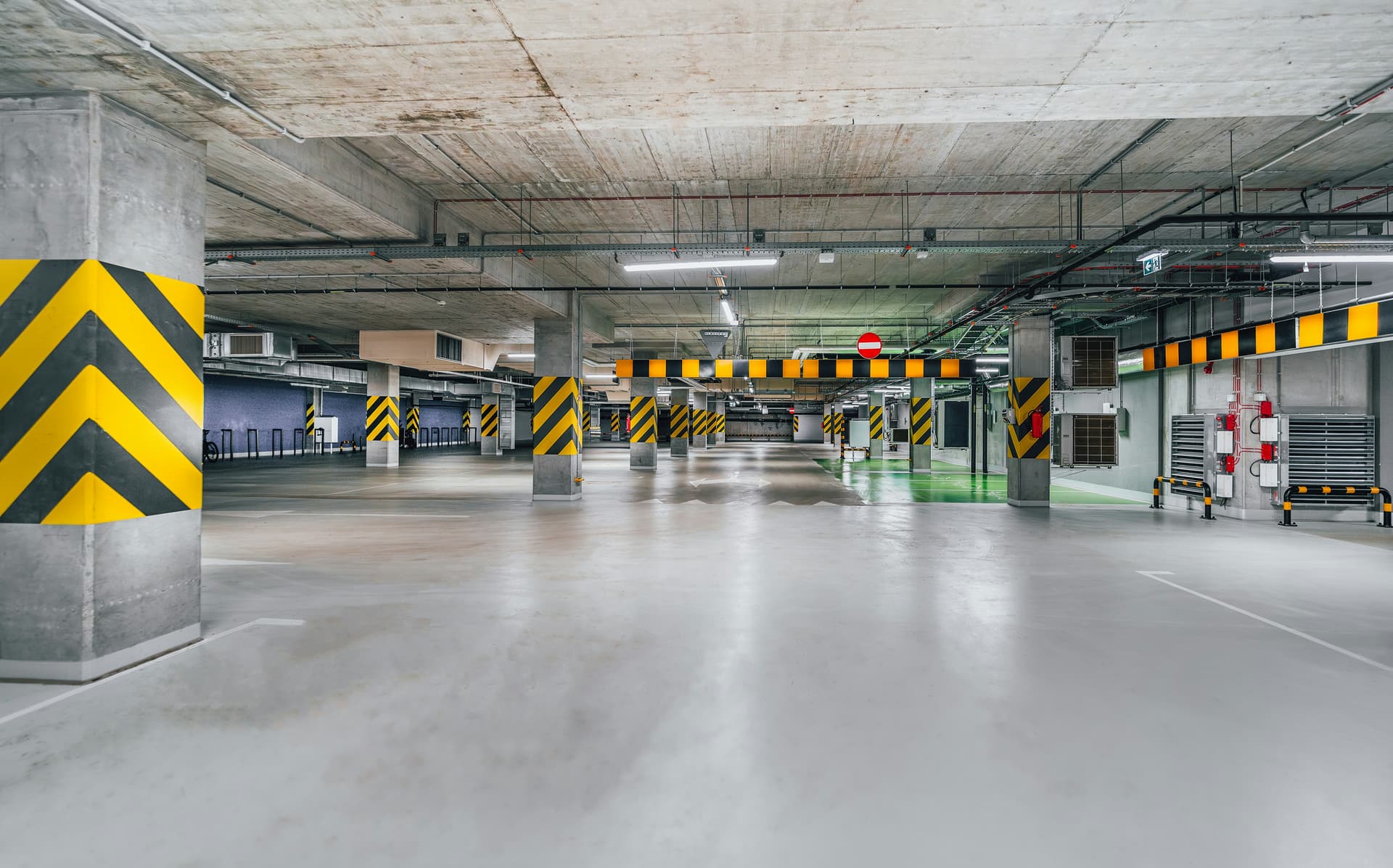
Commercial parking structure — sealed grey epoxy with chevron safety markings
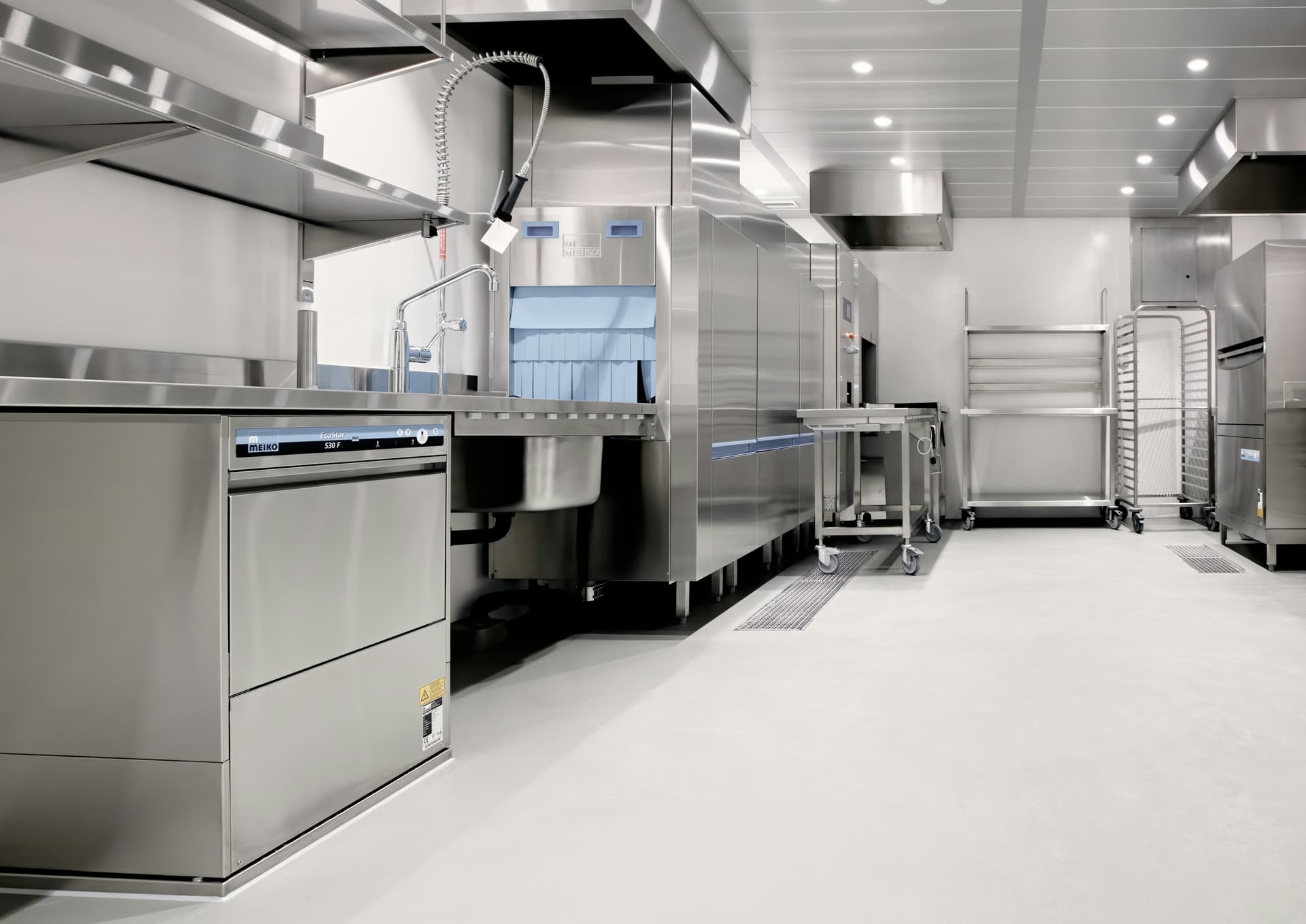
Professional kitchen with seamless grey epoxy floor coating
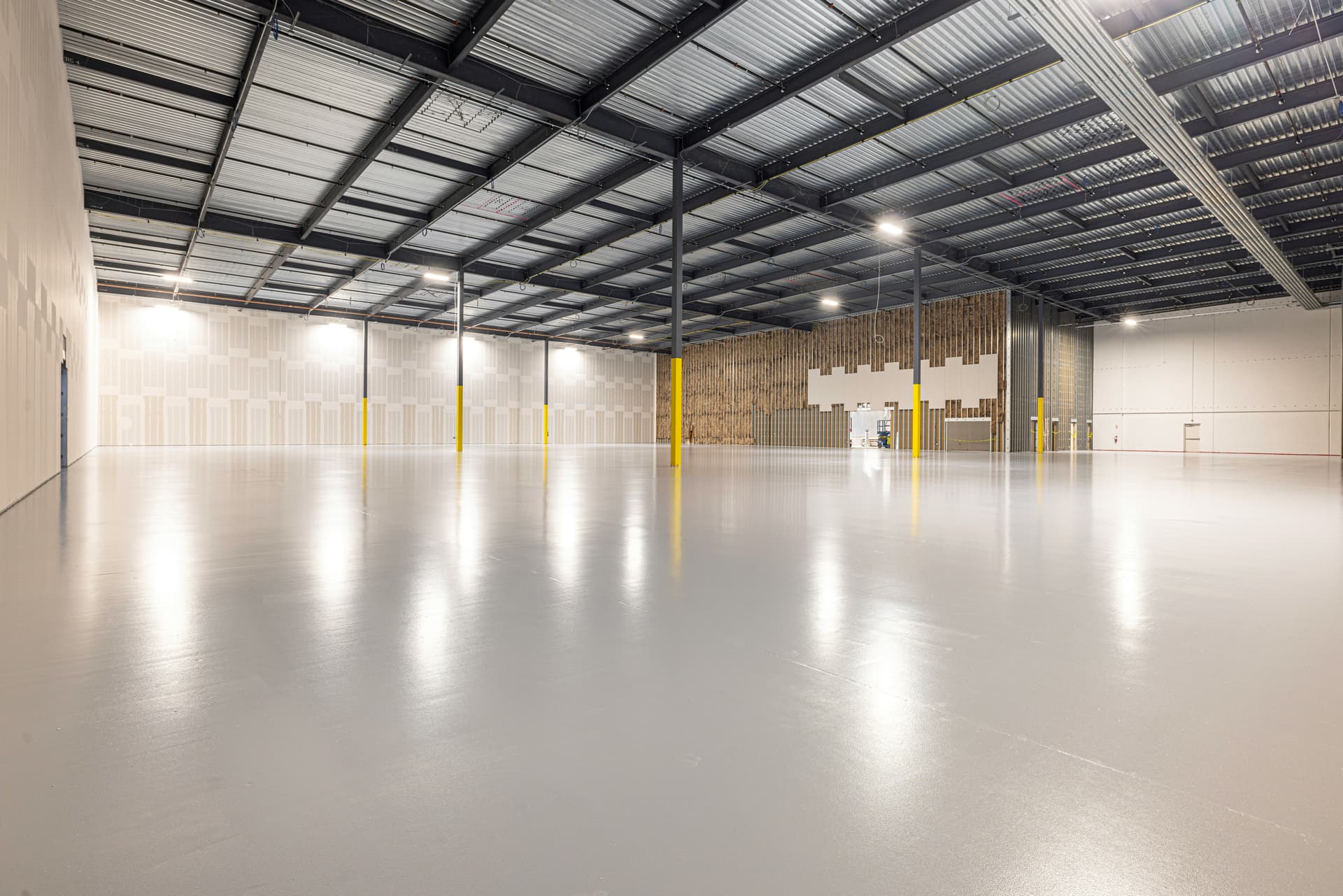
Industrial warehouse — bright white polyaspartic epoxy floor
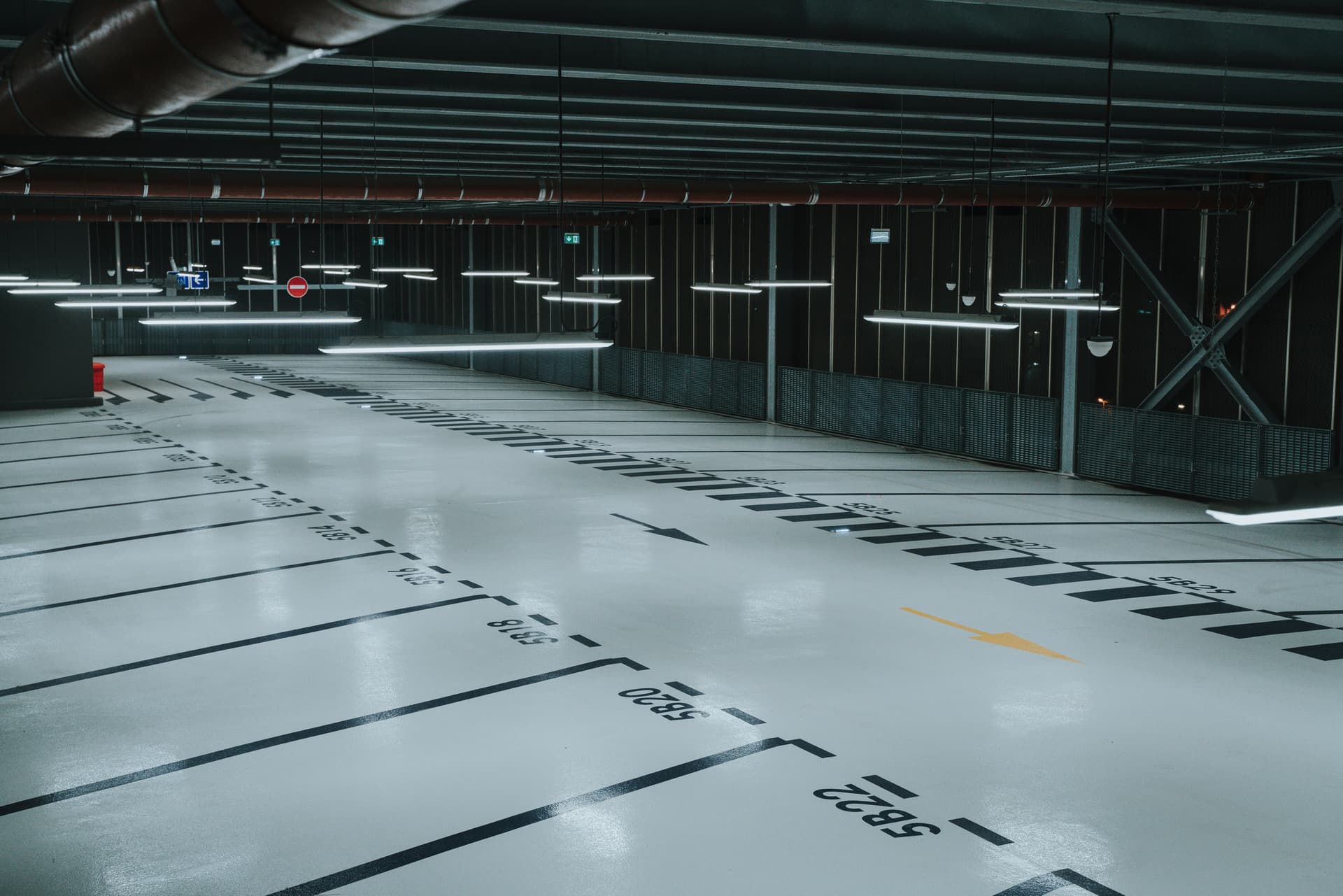
Parking structure with grey epoxy and dramatic pendant lighting
Large commercial space with highly polished epoxy floor
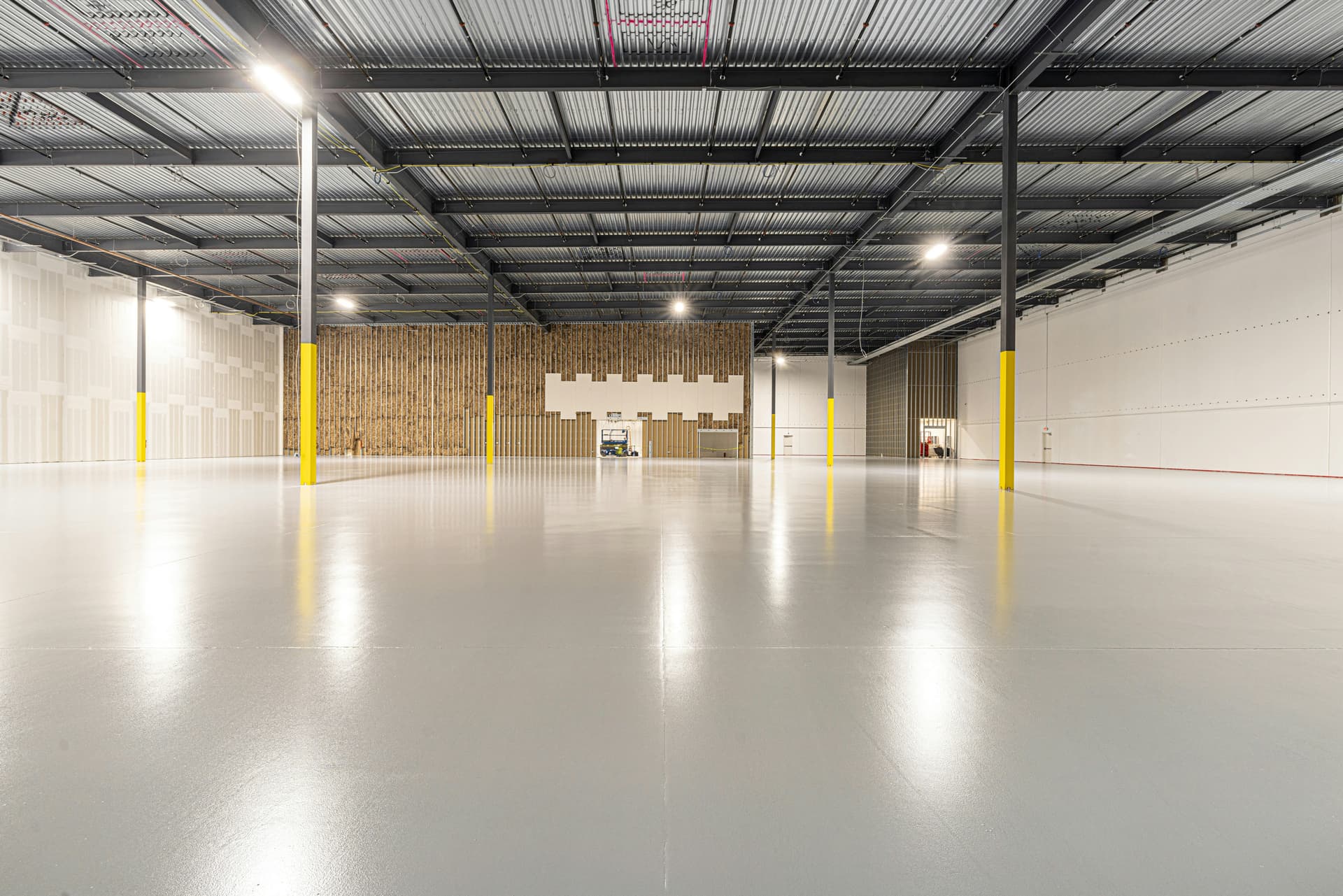
Distribution centre with seamless grey polyaspartic floor system
Concrete Staining Charlotte Questions
What is the difference between concrete stain and concrete paint?
Concrete paint sits on the surface and peels. Acid stain and water-based dye penetrate the concrete and become part of it — they cannot peel because they're not a coating sitting on top. The tradeoff: stain reacts with the concrete chemistry and produces variation, not a uniform solid color.
How long does stained concrete last in Charlotte?
Interior acid-stained or dyed concrete lasts indefinitely with proper sealing — the color is permanent. The sealer over the stain is what needs maintenance, not the color itself. Interior sealers last 5–10 years under normal residential traffic. Exterior sealers on Charlotte patios need reapplication every 2–5 years due to sun and rain.
Can you stain a Charlotte garage floor?
Yes, but epoxy or polyaspartic is usually the better practical choice for garages with vehicle traffic. Acid stain with a robust topcoat is durable, but epoxy systems handle oil, chemicals, and tire contact more reliably and are easier to clean. We recommend stain for garages where the decorative aesthetic is the primary driver.
How much does concrete staining cost in Charlotte?
Concrete staining in Charlotte typically runs $3–7/sqft for interior residential applications depending on system, sealer type, and slab preparation required. Commercial projects are quoted on-site. Contact us for a free estimate on your specific floor.