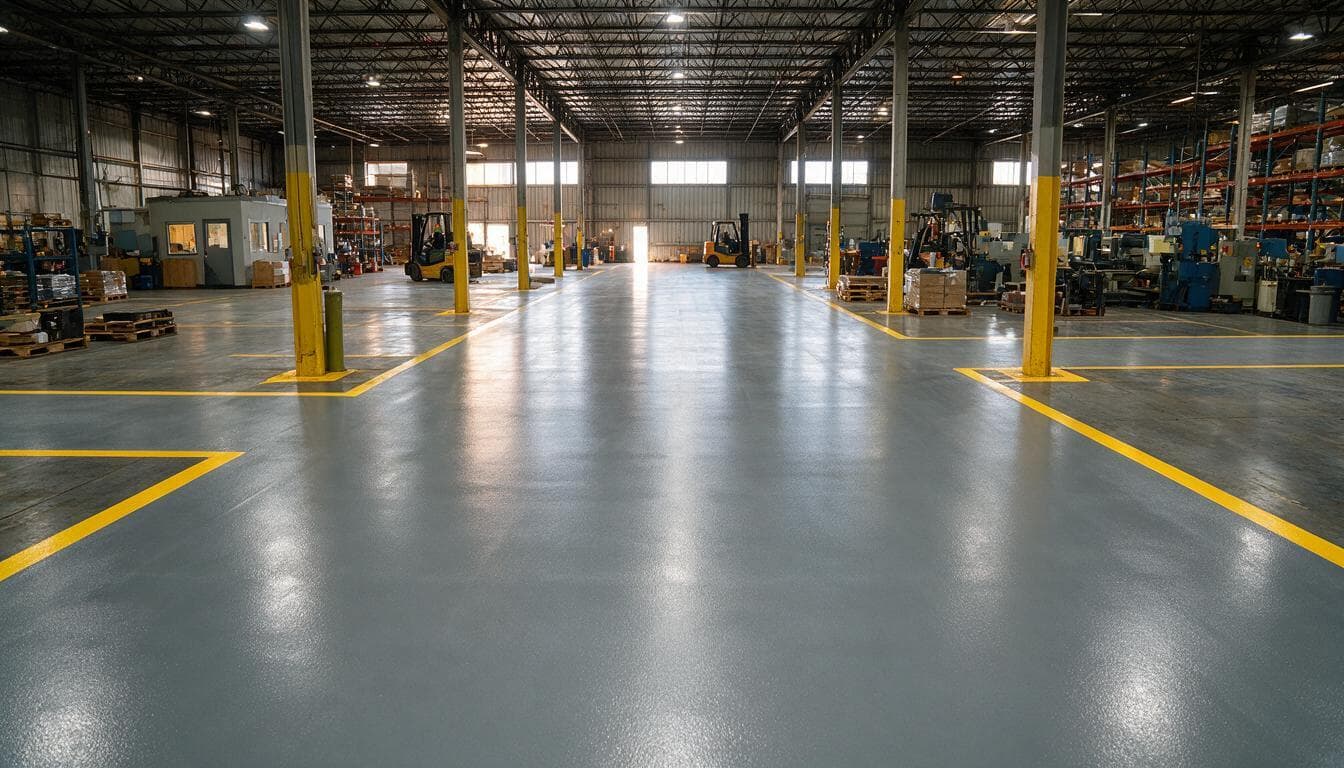
Industrial Floor Coatings
in Charlotte, NC
Specification-Grade Systems. Safety Striping. Schedule Certainty.
Industrial floor coatings in Charlotte require more than epoxy from a bucket. Specification-grade systems, compliance documentation, safety striping, coved bases, and installation schedules that work around shift changes and production runs. Go Epoxy Charlotte installs industrial floor coating systems for manufacturing facilities, food and beverage plants, distribution centres, and processing operations across the Charlotte metro and I-85 industrial corridor — with written specifications and schedule commitments before any work begins.
Industrial Floors by Facility Type
Manufacturing & Factory Floors
Heavy-duty epoxy and urethane cement systems for Charlotte manufacturing facilities. Chemical resistance, impact ratings, safety striping, and shift-based installation schedules.
Manufacturing floors →Food & Beverage Plants
USDA-compliant urethane cement and quartz systems for food processing, brewery, and beverage production facilities. Thermal shock resistance, FDA-acceptable materials, coved bases.
Food & beverage floors →Warehouses & Distribution
High-build epoxy with forklift ratings and OSHA safety striping for Charlotte's distribution and logistics facilities. I-85 corridor and Westport area coverage.
Warehouse floors →Resinous Systems for Industrial Environments
High-Build Epoxy (100% Solids)
$4–8/sqft installed
Standard for light-to-medium industrial. 12–20 mil DFT. Chemical and abrasion resistant. Compatible with forklift and pallet jack traffic. Most Charlotte warehouse and light manufacturing installs use this system.
Urethane Cement
$8–14/sqft installed
Required for thermal shock environments — food processing, commercial kitchens, breweries. Withstands steam cleaning, extreme temperature cycling, and aggressive chemical wash. Bonds to damp concrete.
Epoxy Quartz (Double Broadcast)
$6–10/sqft installed
High chemical resistance, aggressive anti-slip texture, and seamless surface for wet process areas, chemical storage, and secondary containment zones.
Compliance & Written Specifications
Charlotte industrial floor coating projects typically require written system specifications, product data sheets, and compliance documentation for facility audits, insurance underwriters, and lease agreements. Go Epoxy Charlotte provides written specs referencing ASTM test methods for compressive strength, chemical resistance, and slip resistance. Food and beverage installations are specified to FDA 21 CFR 175.300 (resinous coatings in food contact environments) and USDA accepted materials where applicable. NC OSHA silica dust controls during diamond grinding on every project.
Safety Striping — Included in Every Industrial Scope
Safety striping — aisle markings, forklift lanes, hazard zones, emergency exit paths — is included in every industrial floor scope. Go Epoxy Charlotte applies striping per OSHA 1910.22 aisle and passageway standards. Striping applied as a dedicated step after the base coat cures — not taped over wet epoxy.
Yellow
Aisle & forklift lanes
Red
Fire equipment zones
White
Storage boundaries
Orange
Caution areas
Schedule Certainty — Committed in Writing
Industrial floors cannot go down mid-shift. Go Epoxy Charlotte plans industrial installs around your production schedule — nights, weekends, phased sections, or planned shutdowns. Timeline is committed in writing before any work is authorized. Typical Charlotte industrial install: 2,000–10,000 sqft in a 3–5 day phased schedule. Larger facilities quoted individually based on production constraints.
Real Floors. Real Work.
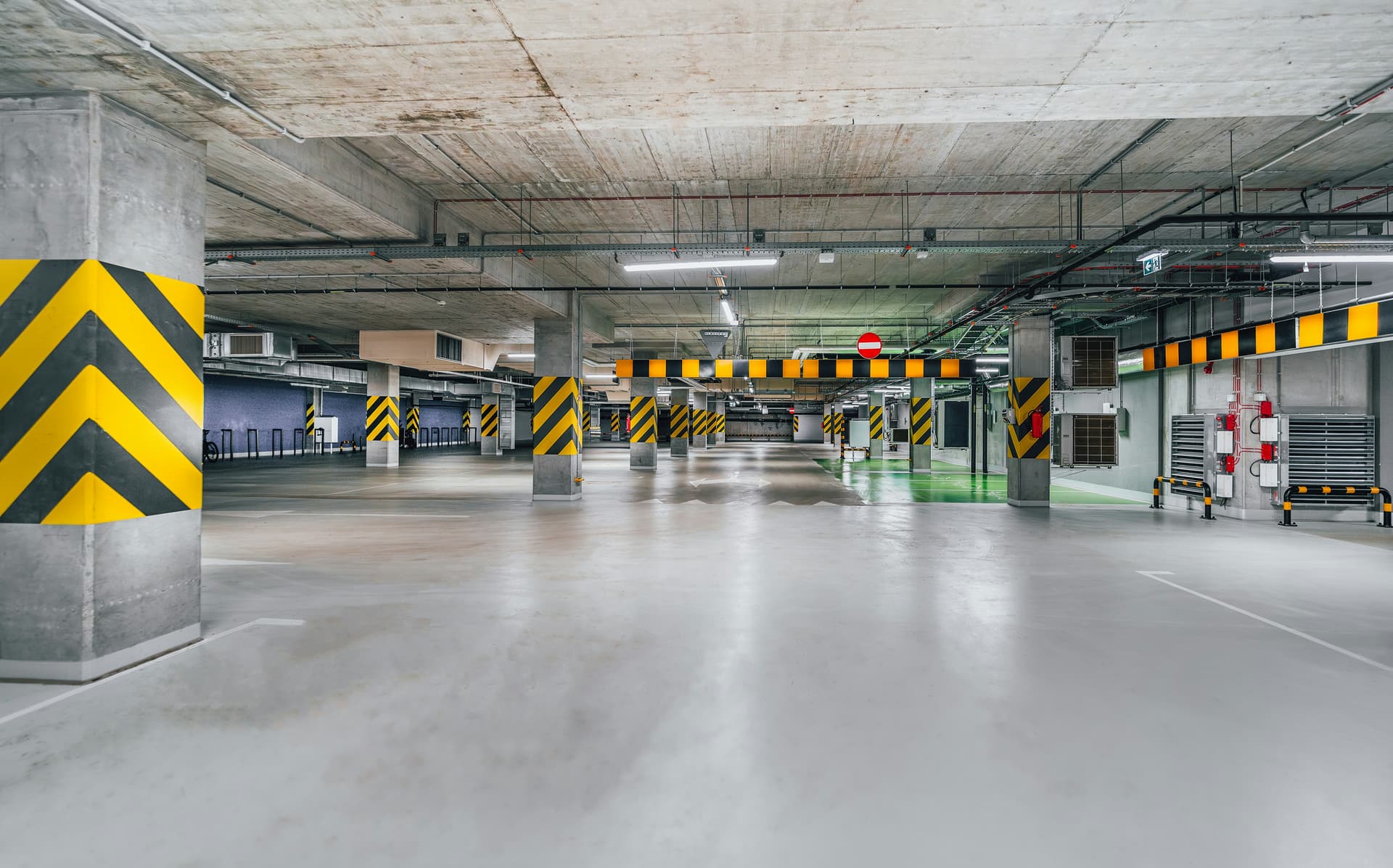
Commercial parking structure — sealed grey epoxy with chevron safety markings
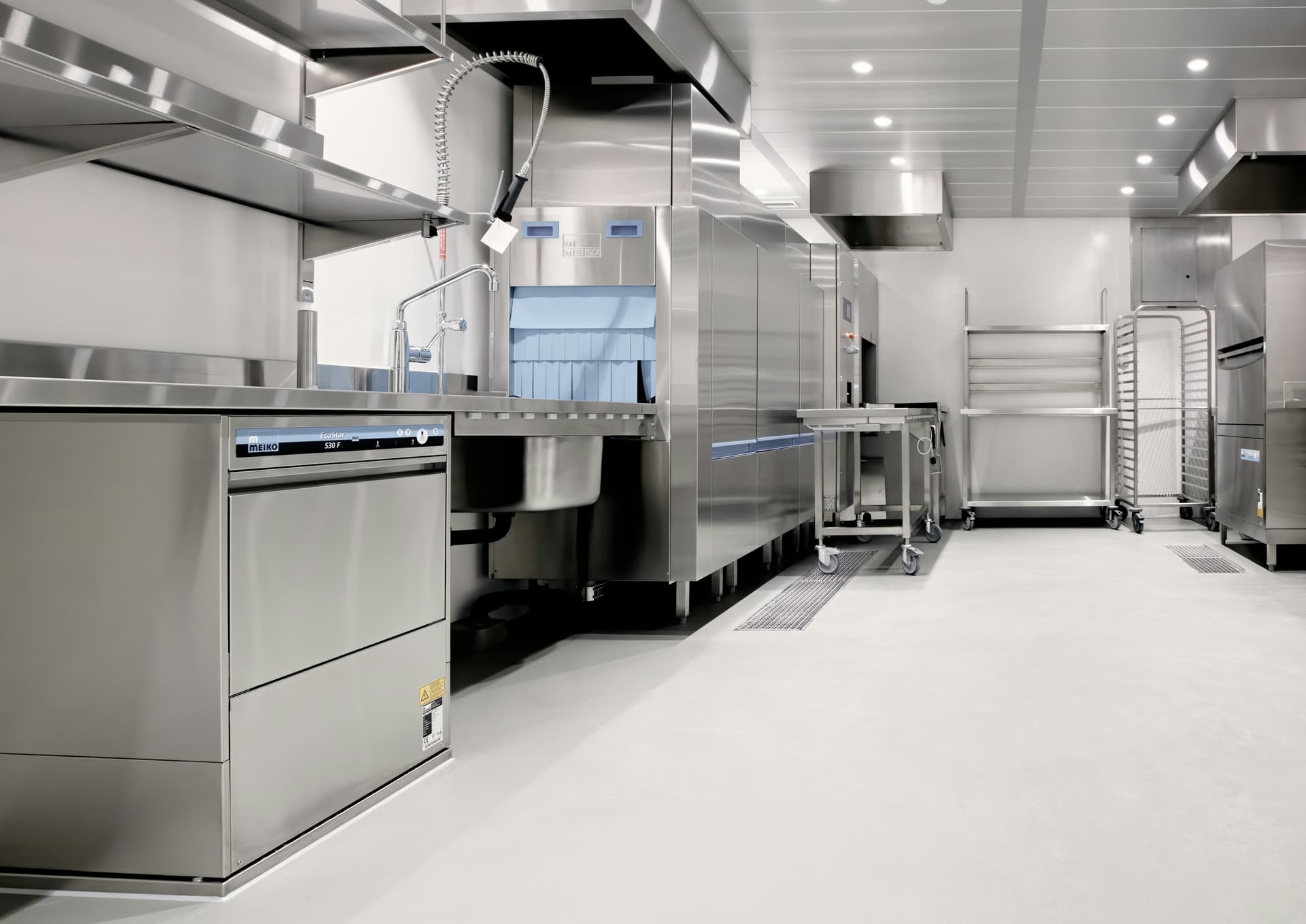
Professional kitchen with seamless grey epoxy floor coating
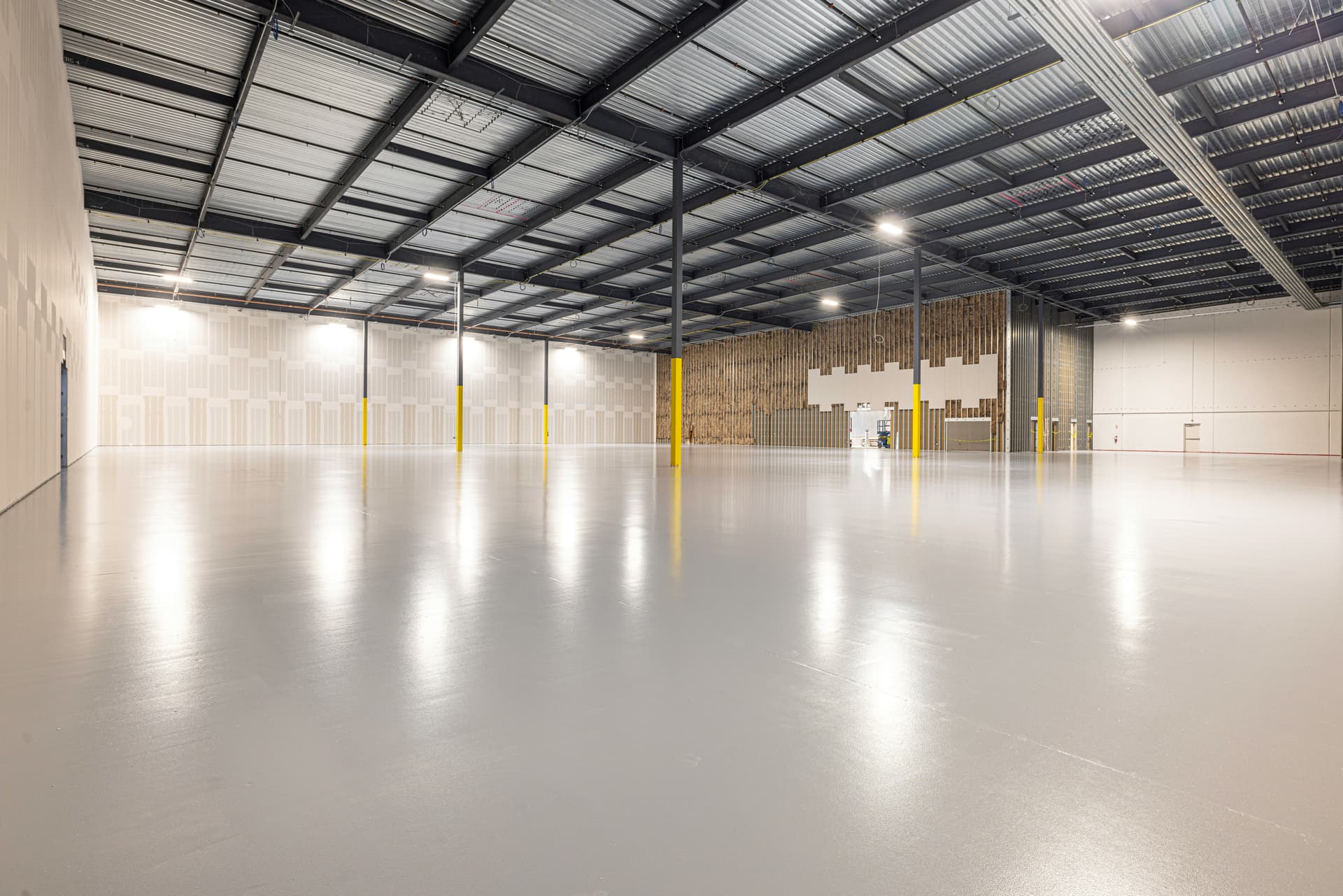
Industrial warehouse — bright white polyaspartic epoxy floor
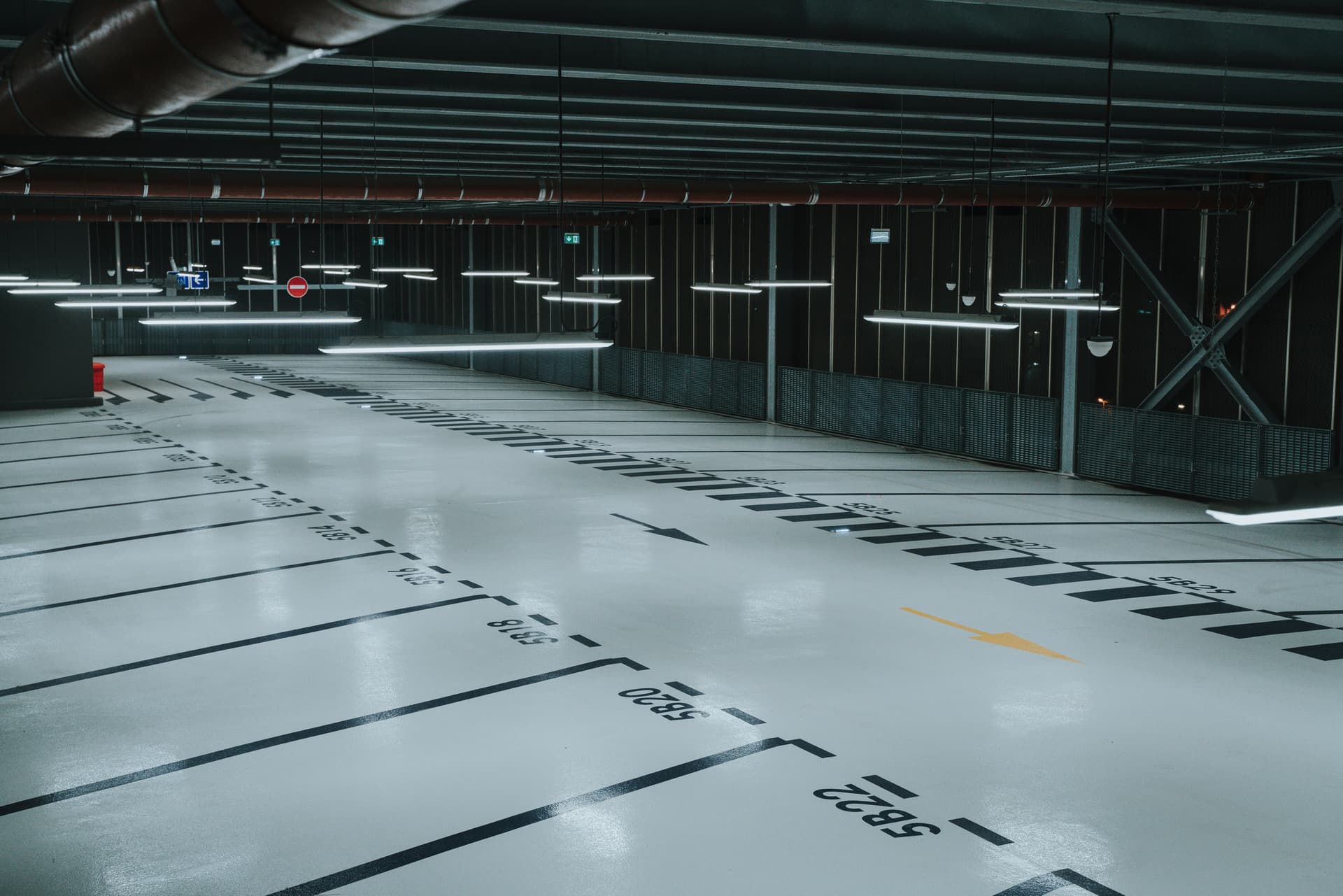
Parking structure with grey epoxy and dramatic pendant lighting

Large commercial space with highly polished epoxy floor
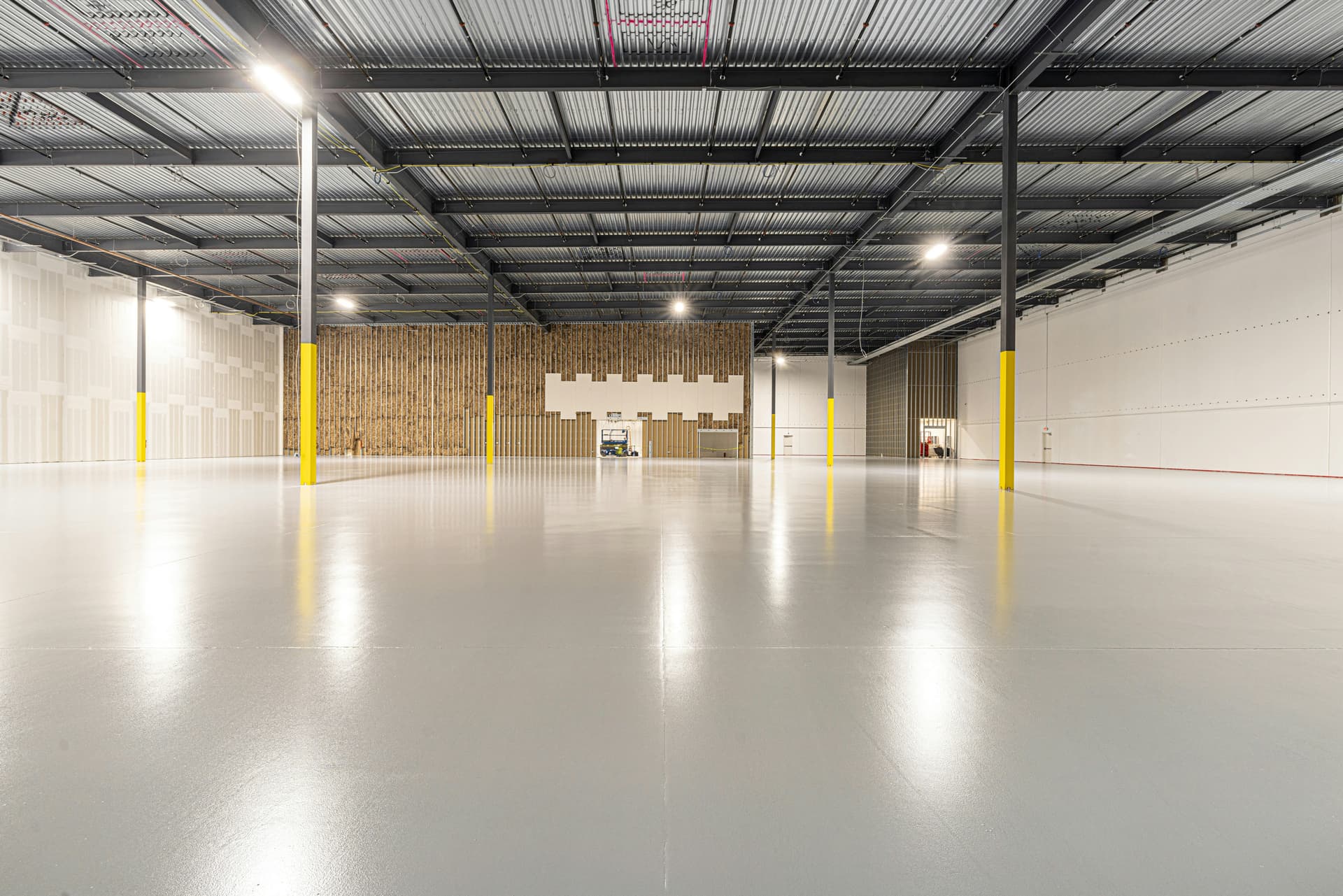
Distribution centre with seamless grey polyaspartic floor system
Industrial Floor Coating FAQ
What floor system is best for a Charlotte manufacturing facility?
Depends on chemical exposure, traffic load, and thermal conditions. Most Charlotte light manufacturing installs use a 100%-solids high-build epoxy at 12–20 mil DFT with a urethane or polyaspartic topcoat. Facilities with thermal cycling, steam cleaning, or food processing exposure require urethane cement. We specify the system at the free site assessment — not before seeing the slab.
Do you provide written specifications for industrial floor projects?
Yes — all industrial projects include a written system specification referencing ASTM test methods, product data sheets, and compliance documentation. This covers facility audits, insurance requirements, and lease documentation. Provided before any work is authorized.
How do you schedule industrial floor coating around production?
We plan around your shift schedule. Most Charlotte industrial installs run nights and weekends in phased sections — one bay or zone at a time — so production continues in adjacent areas. Timeline and phasing plan committed in writing before work begins.
Is urethane cement required for food processing facilities in Charlotte?
For most food processing, brewery, and beverage production environments, yes. Urethane cement handles thermal shock from steam cleaning, bonds to damp concrete, and meets FDA and USDA material standards that standard epoxy does not. See our food and beverage floor coating page for full details.
Ready to Spec Your
Charlotte Industrial Floor?
Free site assessment. Written specification. Schedule committed before work begins.