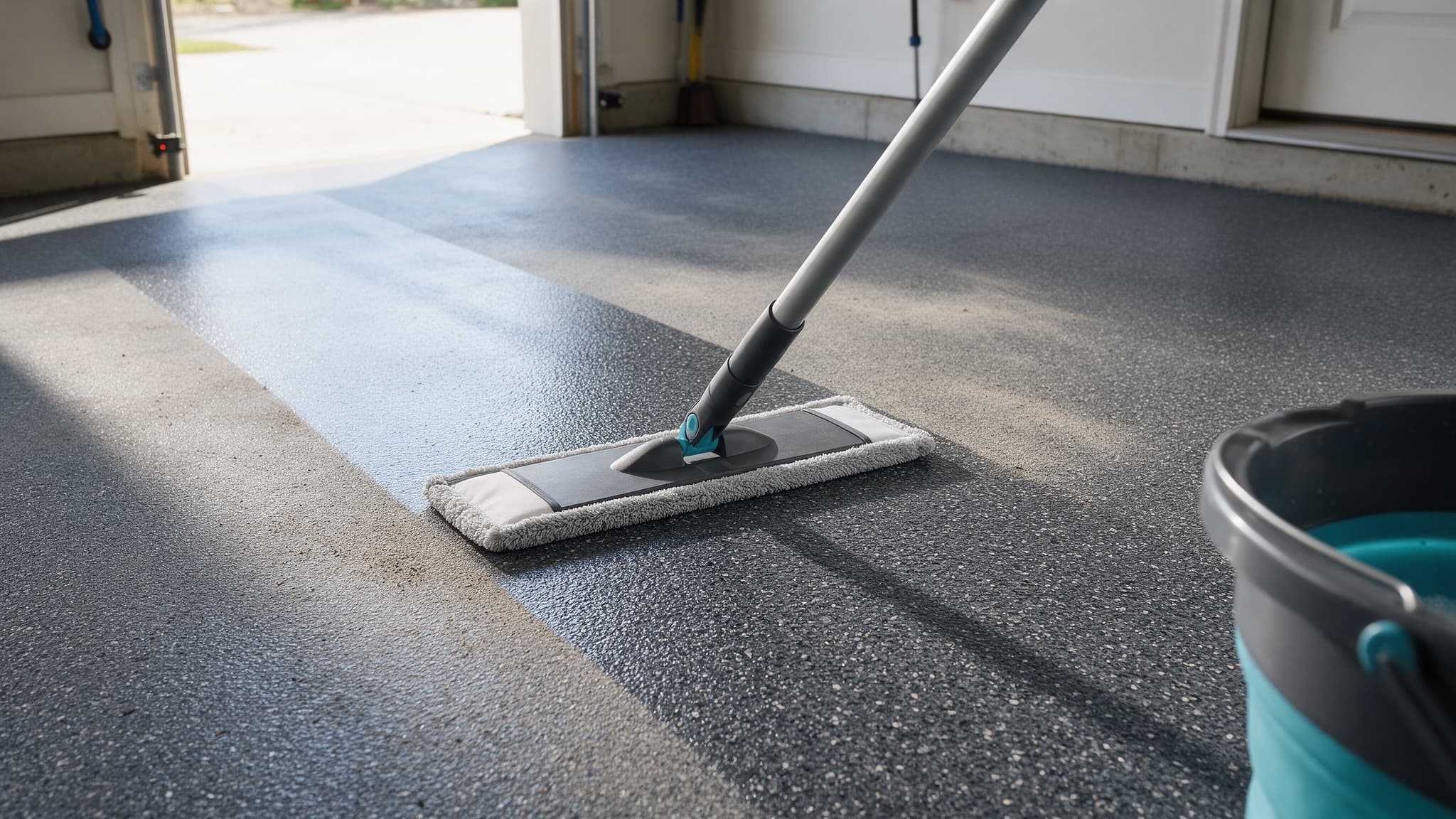
Sweep first, mop with pH-neutral cleaner, rinse, and remove standing water. That is the whole routine. The part people underrate is the sweeping: abrasive grit ground under tyres is what actually dulls a topcoat, far more than any cleaner. The part people get wrong is reaching for vinegar or a citrus cleaner, both of which are acidic and etch the finish over time.
The Routine, Step by Step
Clear the floor and dry sweep
Move everything off, then dust mop or soft sweep the entire surface including under where vehicles park. This is the step that preserves gloss. Grit left on the floor gets ground in by tyres and shoes, and that abrasion is the dominant wear mechanism on a residential coating.
Spot treat oil and stains first
Work a pH-neutral degreaser into oil spots with a soft nylon brush and let it dwell several minutes before rinsing. Doing this before the general wash matters, because mopping over lifted oil simply spreads a thin film across the whole floor.
Mop with pH-neutral cleaner
Dilute per the label and use a microfibre flat mop. Warm water helps. Resist the urge to use more cleaner than specified: over-concentration is what leaves the hazy residue people later mistake for a failing topcoat.
Rinse and pull the water off
Rinse with clean water, then squeegee toward the door or pick it up with a shop vacuum. Letting cleaner-laden water evaporate in place is the single most common cause of a dull, streaky looking floor.
Do and Do Not
Do
- + Dust mop or soft sweep weekly, more often if you track in grit
- + Use a pH-neutral cleaner diluted per its instructions
- + Spot treat oil promptly with a soft nylon brush
- + Rinse and remove standing water rather than letting it dry
- + Put a mat under any vehicle that leaks
- + Rinse off winter road salt within a few days
Do not
- − Vinegar, citrus, or any acidic cleaner
- − Bleach or ammonia based products
- − Soap that leaves a film and turns the floor slippery
- − Abrasive pads, steel wool, or wire brushes
- − Solvents such as acetone or paint thinner
- − Dragging jack stands or toolboxes across the surface
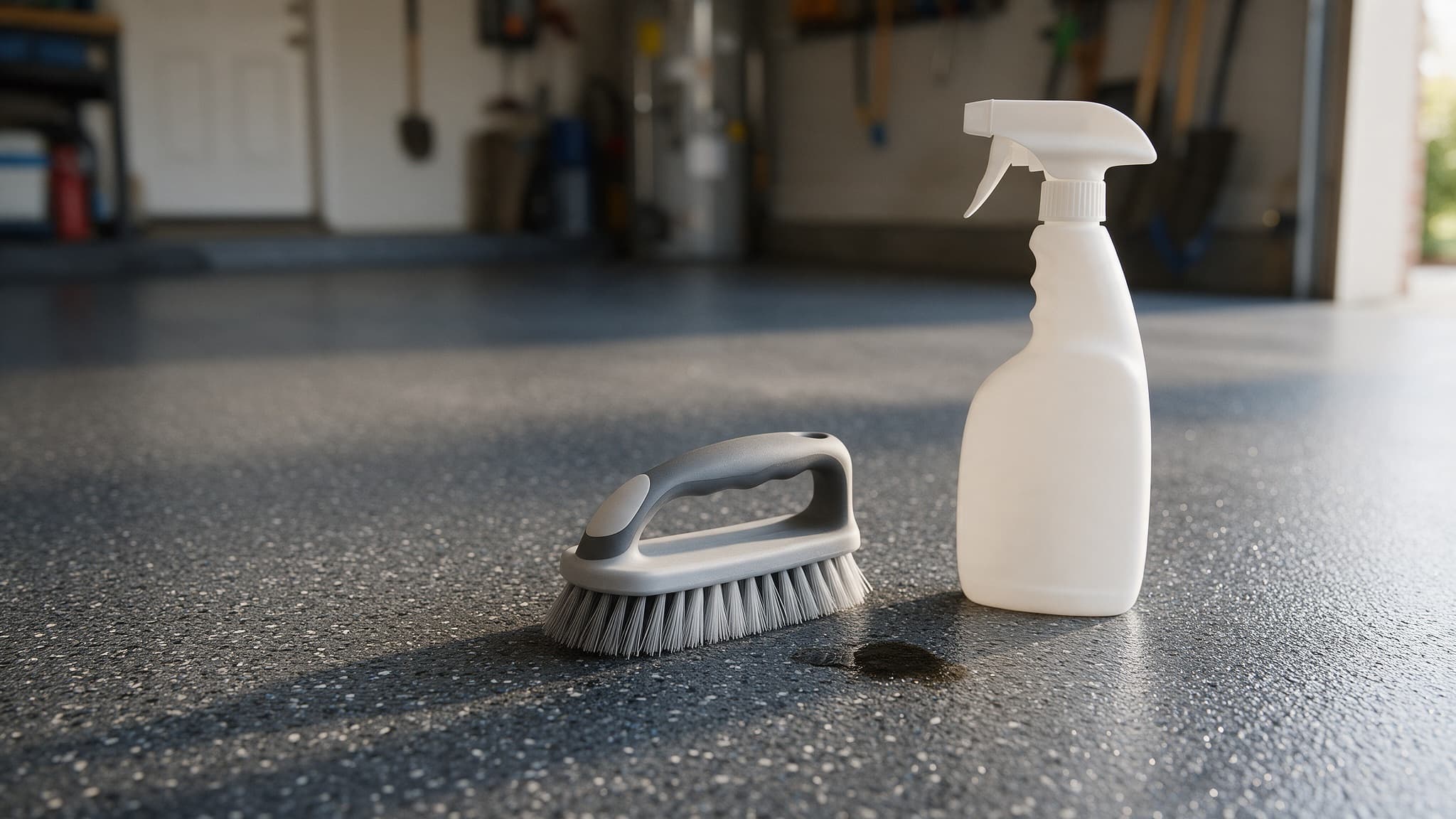
Soft nylon and a neutral cleaner. Anything acidic or abrasive costs you gloss you cannot get back without recoating
Why pH-Neutral Matters More Than Brand
The advice to use a specific branded cleaner is mostly marketing. What actually matters is pH. A cured coating tolerates neutral cleaners indefinitely and degrades under repeated acid exposure, which softens the surface slightly each time and leaves it progressively duller and more porous.
This catches people out because the acidic options are the ones sitting in the cupboard already. Vinegar is widely recommended for concrete and is genuinely bad for a coated floor. Citrus degreasers are effective and acidic. Many tile and bathroom cleaners are formulated to cut mineral deposits, which means acid by design. None of these destroy a floor in one use, and all of them cost you gloss over a few years of regular use.
One Charlotte-specific addition: rinse off winter road salt rather than letting it sit. Salt is corrosive, it works into any pinhole or edge detail, and a garage that sees salt every January without a rinse ages noticeably faster at the door line than one that gets hosed down.
Floor gone dull in the tyre paths despite regular cleaning? That is usually topcoat wear rather than dirt, and a refresh costs far less than a replacement. We will tell you which you are looking at. Free across the Charlotte metro.
Get Free EstimateFrequently Asked Questions
Related Guides
Share this guide: