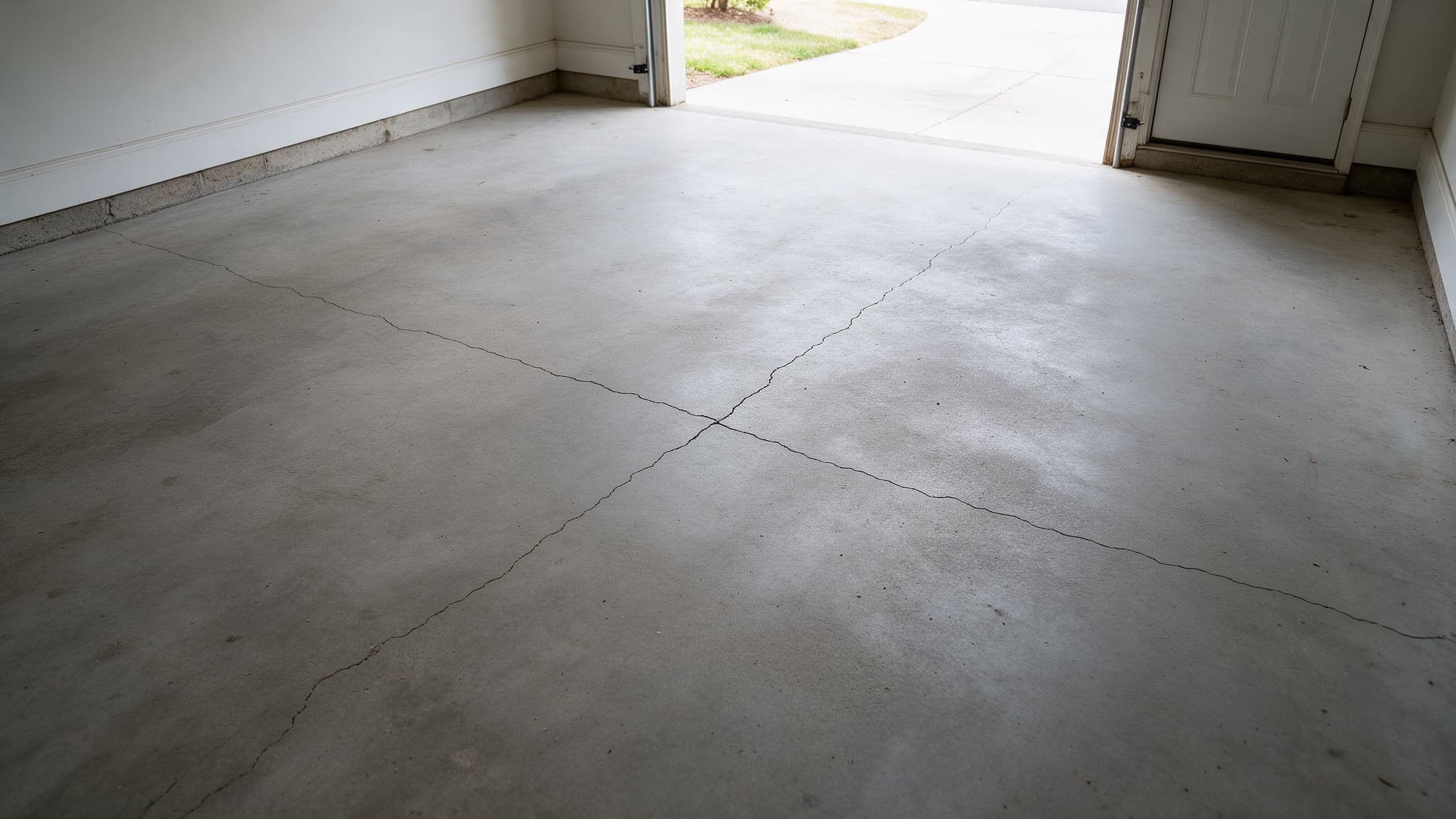
Yes, over static cracks that are properly repaired first. Hairline shrinkage and dormant settlement cracks get routed, filled, ground flush, and disappear under the coating. No, over active or structural cracks, which keep moving and telegraph straight back through a film that is only a few tens of mils thick. The question is never really whether you can coat over a crack. It is whether that crack has stopped moving.
Which Cracks Can Be Coated
| Crack Type | Typical Width | Coatable | Action |
|---|---|---|---|
| Hairline shrinkage | Under 1 mm | Yes | Clean, fill, coat over |
| Dormant settlement | 1–5 mm, level edges | Yes | Rout, fill rigid, coat over |
| Control joint | Sawn line | Yes | Semi-rigid filler, then coat |
| Active crack | Any, still moving | Not yet | Monitor, find the cause first |
| Structural crack | Displaced edges | No | Structural assessment required |
| Spalled or crumbling | Broken area | After repair | Remove loose material, rebuild |
Crack and joint repair typically adds $2–6 per linear foot. Extensive cracking or slab replacement is quoted separately.
Active or Dormant, and How to Tell
A dormant crack formed once and stopped. Most garage slab cracks are of this kind: concrete shrinks as it cures and relieves the stress by cracking, usually within the first year, and then nothing further happens for decades. Edges sit level with each other, width is consistent, and the crack does not extend.
An active crack is still responding to something. Vertical displacement is the clearest tell, where running a hand across shows one side sitting proud of the other. Width varying noticeably along the length is another, as is a crack running from a corner toward a wall in a diagonal. Those patterns point at soil movement or settlement rather than curing shrinkage.
When it is genuinely ambiguous, the honest answer is to measure rather than guess. A crack monitor fixed across the line and left for several weeks through a wet and dry cycle will show movement if there is any. On Charlotte clay, which swells and shrinks noticeably with moisture, that seasonal cycle is exactly what reveals a slab that is still working.
How the Repair Is Done Properly
Assess before pricing anything
Walk the slab and classify every crack: width, edge alignment, whether it runs to a wall or corner, whether there is displacement. A quote produced without this is a guess, and crack repair is the line item most likely to change a project total.
Rout the crack out rather than filling it as found
A crack as it sits is a narrow tapering gap that filler cannot key into properly. Cutting it into a clean square channel gives the repair material real surface area on both faces. Skipping this is why so many crack repairs pop back out within a year.
Fill with the right rigidity for the job
Static cracks take a rigid polyurea or epoxy filler that becomes structurally part of the slab. Control joints take a semi-rigid filler that supports the edges and still permits movement. Using rigid material in a moving joint simply relocates the crack a few millimetres to one side.
Grind the repair flush with the slab
The repair is ground back level as part of the general diamond grinding pass. A proud repair reads through the coating as a visible ridge, and a recessed one collects coating and shows as a dark line. Flush is the only acceptable result.
Fix the cause where there is one
A crack that traces back to a downspout discharging at the foundation, poor grading, or a failed drain will keep moving no matter what goes in it. On Charlotte clay, water management outside the building is frequently the actual repair, and coating before addressing it wastes the coating.
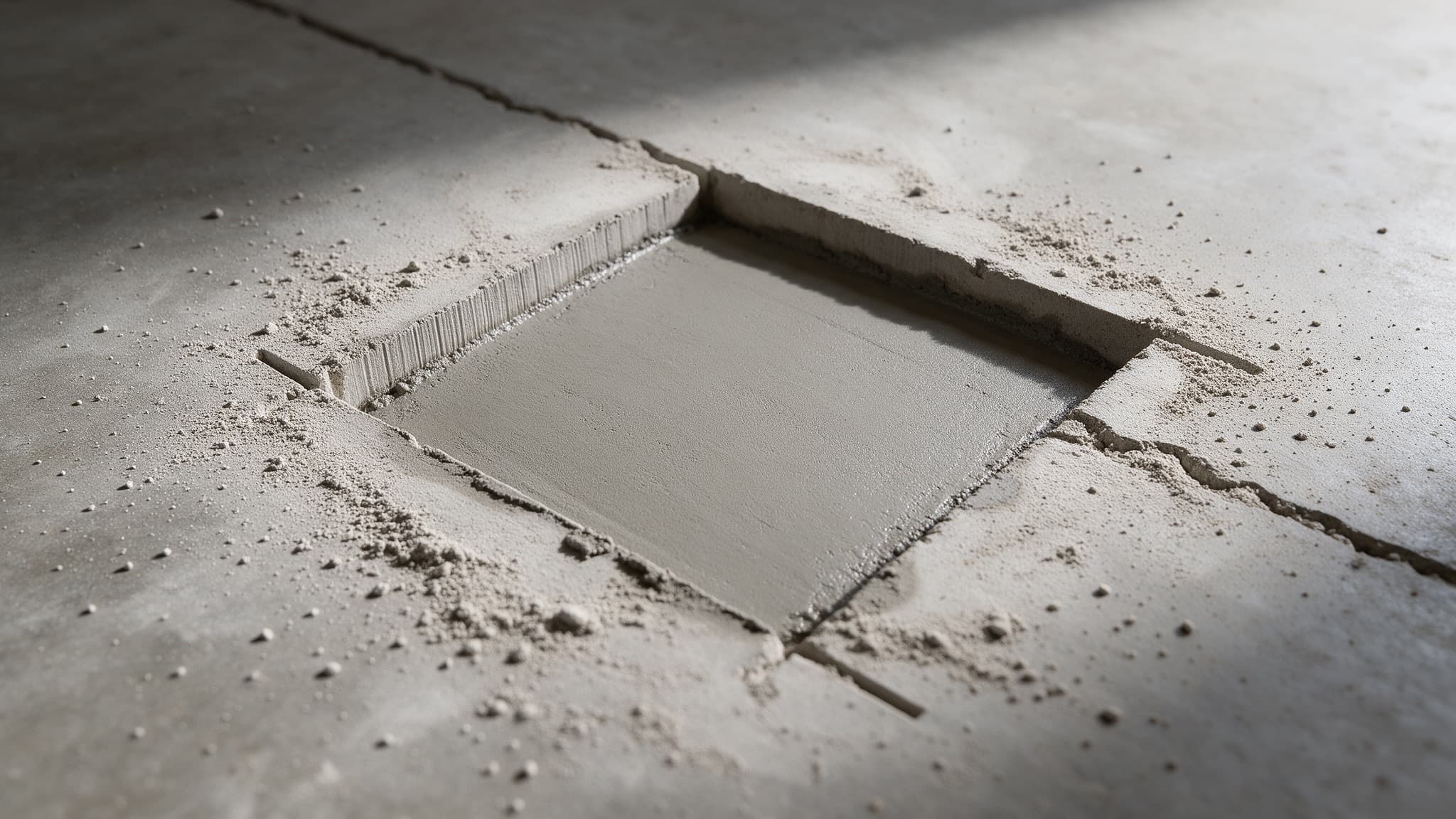
Routed into a clean channel and filled. Filling a crack as found gives the repair material almost nothing to hold onto
When We Say Not Yet
Some slabs are telling you about a problem that lives outside the garage. A crack running diagonally from a corner, one that has opened noticeably over a season, or one paired with doors that have started sticking is pointing at foundation movement. Coating that floor produces an attractive surface over an unresolved structural issue, and the crack reappears through it.
The other common case in Charlotte is water management. Downspouts discharging beside the foundation, ground sloping toward the building, and blocked perimeter drains all keep clay soil cycling between saturated and dry, which is what moves slabs. Correcting drainage costs less than a floor and is frequently the actual repair.
None of this means the floor cannot ever be coated. It means the sequence matters: resolve the movement, confirm it has stopped, then coat. A floor installed in that order lasts as long as any other. One installed over a live crack disappoints within a year, and the coating gets blamed for something it was never able to fix.
Not sure whether your cracks are a preparation line item or a reason to wait? We assess before quoting, and we will tell you when the honest answer is to fix drainage first. Free across the Charlotte metro.
Get Free EstimateFrequently Asked Questions
Related Guides
Share this guide: