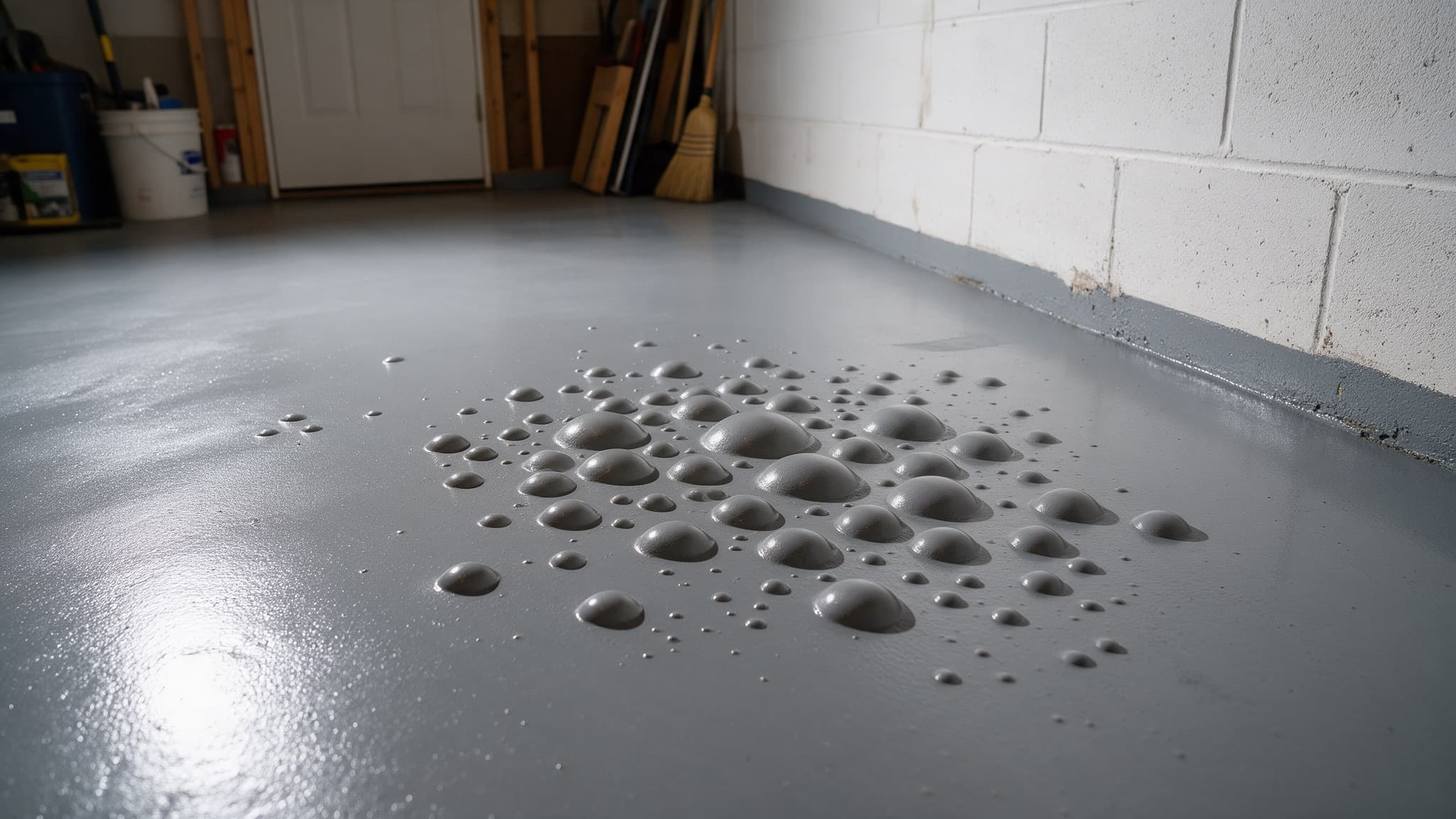
If the bubbles are tiny pinholes that appeared during installation, that is outgassing: cosmetic, not spreading, fixable locally. If they are domes that showed up weeks or months later and are growing, that is moisture vapour lifting the coating from beneath. The second cannot be patched. It needs the coating off, the slab tested with probes, and a mitigating primer at $0.50–0.75 per square foot before anything is recoated.
Telling Them Apart
| Sign | Trapped Air | Moisture Vapour |
|---|---|---|
| When it appeared | During or right after install | Weeks to months later |
| Size | Pinholes, 1–3 mm | Domes, 10 mm to 100 mm+ |
| Spreads over time | No | Yes, and accelerates |
| Distribution | Even across the floor | Clusters in low areas or one wall |
| Cut one open | Dry and hollow | Damp slab or standing moisture |
| Fix | Sand and recoat locally | Strip, test, prime, recoat |
Cutting one open is the decisive test and takes a utility knife. A damp slab under the dome settles the question immediately.
What Causes It
Vapour pressure from the slab
The dominant cause of late blistering. Water in the ground moves up through concrete as vapour, and a sealed coating gives it nowhere to go, so it collects at the bond line and pushes the film upward into a dome. Charlotte clay makes this common enough that we test every slab rather than only suspicious ones.
A slab that was never dry to begin with
Concrete poured within the last year is still releasing water from the original mix. Coating it early traps that moisture under the film. This is why new-build garages sometimes blister within months while an identical thirty-year-old slab next door does not.
No vapour barrier under the slab
Older Charlotte construction frequently has no polyethylene barrier beneath the concrete, so the slab is in direct contact with damp soil permanently. Nothing can be done about that from above except mitigating at the coating stage, which is exactly what a mitigating primer is designed for.
Outgassing during application
Air in the pores of the concrete expands as the slab warms and pushes up through the wet coating, leaving pinholes. It is an application-timing issue, usually from coating a slab that is warming rather than cooling. It is cosmetic, does not spread, and is corrected by sanding and recoating the affected area.
Coating applied too thick in one pass
Heavy films trap solvent and air that would otherwise release. This produces bubbles that are neither classic outgassing nor moisture, and it is squarely an installation error. It shows up in patches rather than across the whole floor, usually where material pooled.
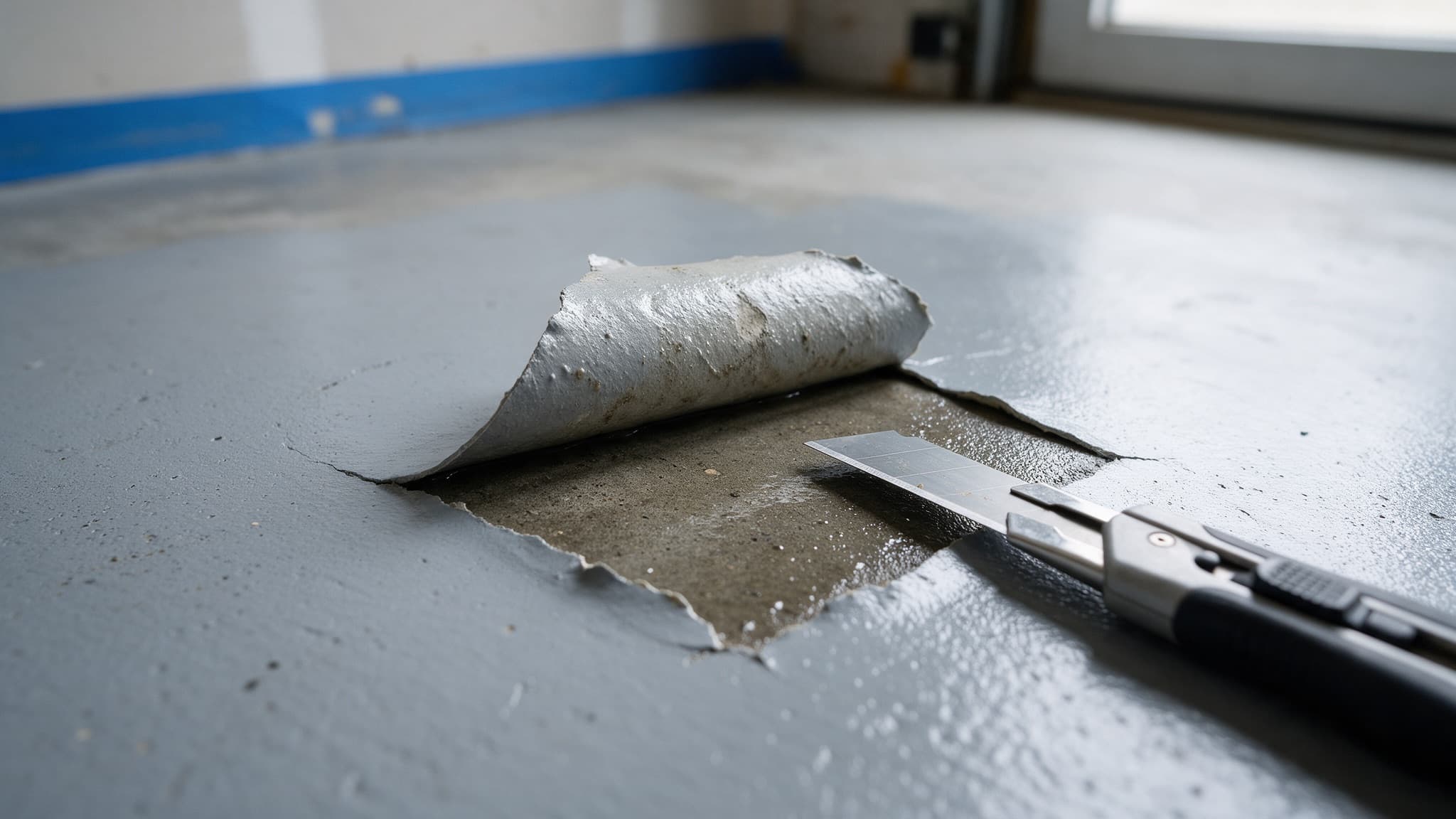
Cut open, the answer is immediate. A damp slab beneath the dome means vapour pressure, and no amount of patching will hold
Fixing It Properly
For outgassing pinholes, the repair is straightforward: sand the affected area, clean it, and apply a fresh topcoat. Because the cause is gone once the coating has cured, it does not return.
For moisture blistering, there is no shortcut. The coating comes off the affected area and well beyond it, because the debonded zone always extends past the visible domes. Then the slab is tested with in-slab relative humidity probes, left to equilibrate, and read properly. A surface meter will not answer this question, because it describes today rather than what the slab does across a year.
Where readings come back above roughly 75 to 80 percent, a moisture-mitigating primer goes down before any coating. It is a barrier product designed to hold back vapour pressure, and it is the only thing that makes the replacement floor viable. Skipping it because the first floor was expensive is how people end up paying for a third.
Also worth addressing from outside: downspouts discharging next to the foundation, grade sloping toward the building, and blocked perimeter drainage all raise slab moisture. Fixing those reduces the load on whatever goes down inside, and on a basement it is often the more consequential repair.
Blisters appearing months after the job? We test slab moisture with probes before quoting, so you find out whether the replacement needs mitigation before you commit to it. Free across the Charlotte metro.
Get Free EstimateFrequently Asked Questions
Related Guides
Share this guide: