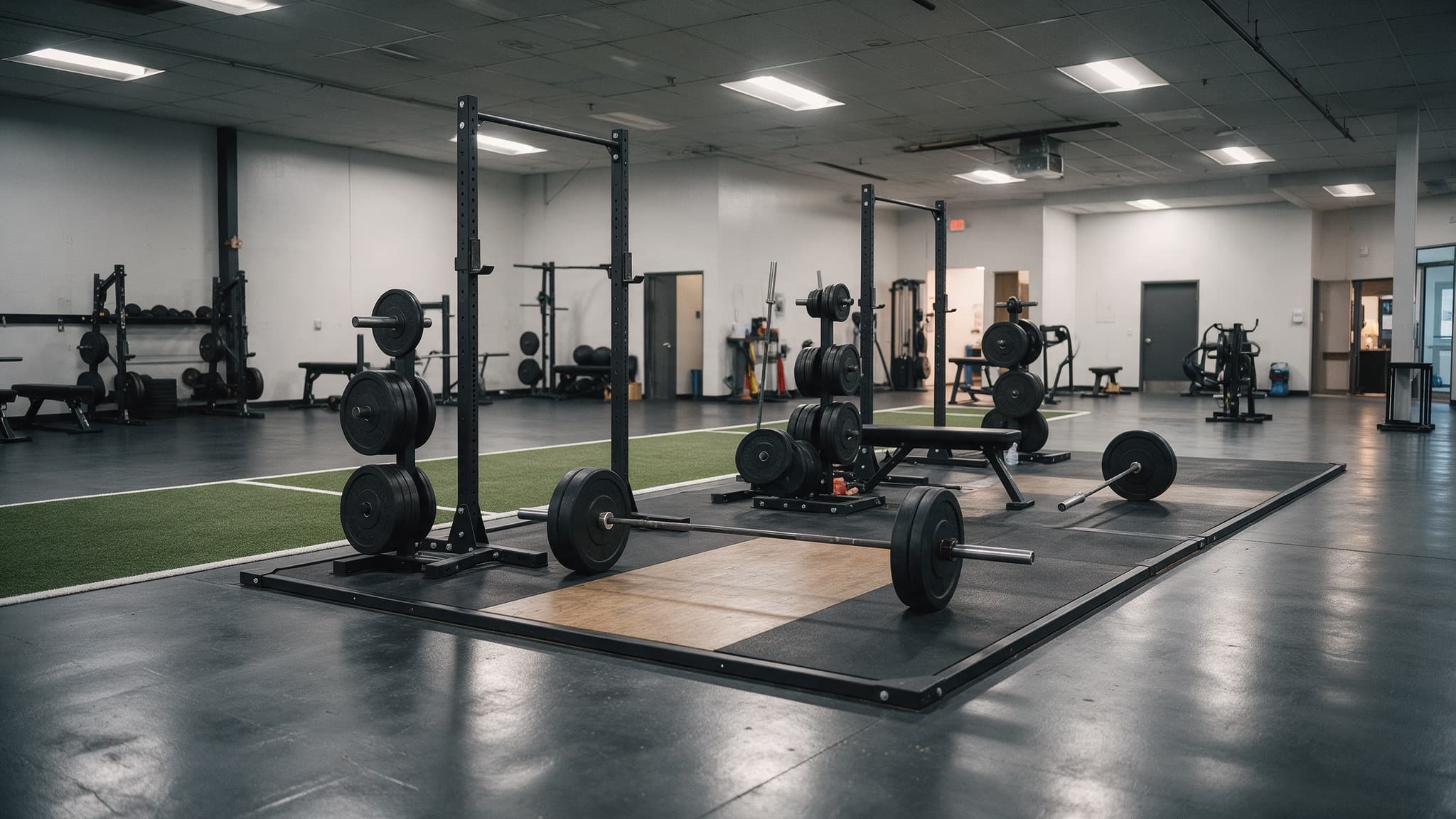
A coating is the right surface for cardio, turf, studio space, circulation and locker rooms. It is the wrong surface anywhere loaded barbells land, where rubber goes over the top of it. Specify satin rather than gloss and vary the antislip grade by zone. A commercial resin system runs $5–9 per square foot installed, with rubber quoted separately.
What Goes Where
| Zone | Surface | Why |
|---|---|---|
| Free weights and platforms | Rubber over coating | Dropped load chips any resin |
| Machines and cardio | Coating, satin finish | Point loads, no impact |
| Turf lane | Turf over coating | Sled work, coating protects slab |
| Studio and class space | Coating, fine antislip | Bodyweight, needs grip when wet |
| Circulation and reception | Coating or polished | Appearance and cleanability |
| Locker rooms and showers | Coating, coarse antislip | Constantly wet, slip risk |
In every row where rubber or turf goes down, the coating still runs underneath it. That is what keeps the slab sealed and dust-free.
Why Coating Under Rubber Is Not Wasted Money
It is a fair question: if rubber is going over the lifting zone anyway, why coat the concrete beneath it. The answer is what happens to bare concrete in a gym. Untreated slab dusts continuously under traffic, and that fine grit migrates everywhere, onto equipment, into bearings, over every other surface in the building.
Bare concrete also absorbs. Sweat, spilled drinks and mop water soak into a porous slab and stay there, and in a warm Charlotte facility that becomes an odour problem that cleaning does not reach because the source is inside the concrete rather than on it. A coated slab under rubber stays sealed, and when a rubber tile is eventually lifted or replaced, what is underneath is still clean.
The practical version: coat the whole floor as one continuous surface, then lay rubber and turf on top where the use demands it. You get a sealed, cleanable building and the impact protection where it is needed, and the two decisions stop competing with each other.
Five Specification Decisions
Decide impact zones before anything else
Map where loaded barbells will actually come down, then plan rubber over the coating there and resin everywhere else. Gyms that coat the whole floor and sort out rubber later end up with chipped impact zones inside a year, and a chipped coating under a platform is awkward to repair because the platform has to come out again.
Satin, not gloss
High gloss is the default request and the wrong one for a gym. Equipment feet, dropped plates sliding, and dragged benches all leave scuff marks that read clearly on gloss and disappear on satin. Gloss also gets slick the moment sweat lands on it, which is a liability question as much as a maintenance one.
Antislip grade by zone, not one grade everywhere
Locker rooms and shower surrounds want a coarse aggregate because they are wet constantly. Studio and class space wants a fine grade that grips with bare feet without being abrasive. Cardio and circulation need very little. A single aggressive profile across the whole facility is harder to clean and unpleasant underfoot in the areas that did not need it.
Check the slab under the platforms
Years of dropped weights before the coating existed often leave the platform areas spalled or hollow. Coating over that gives you a sound-looking surface over compromised concrete, and the next dropped bar finds the weakness. Those areas need repair before coating, which is a substrate cost rather than a floor finish cost.
Phase it by zone to stay open
Most Charlotte facilities cannot close for a week. Resin work phases well: rope off one zone, move the equipment, grind, coat, return it, move to the next. A polyaspartic build returning to service in roughly 24 hours makes this considerably easier than a standard epoxy needing 72 hours per zone.
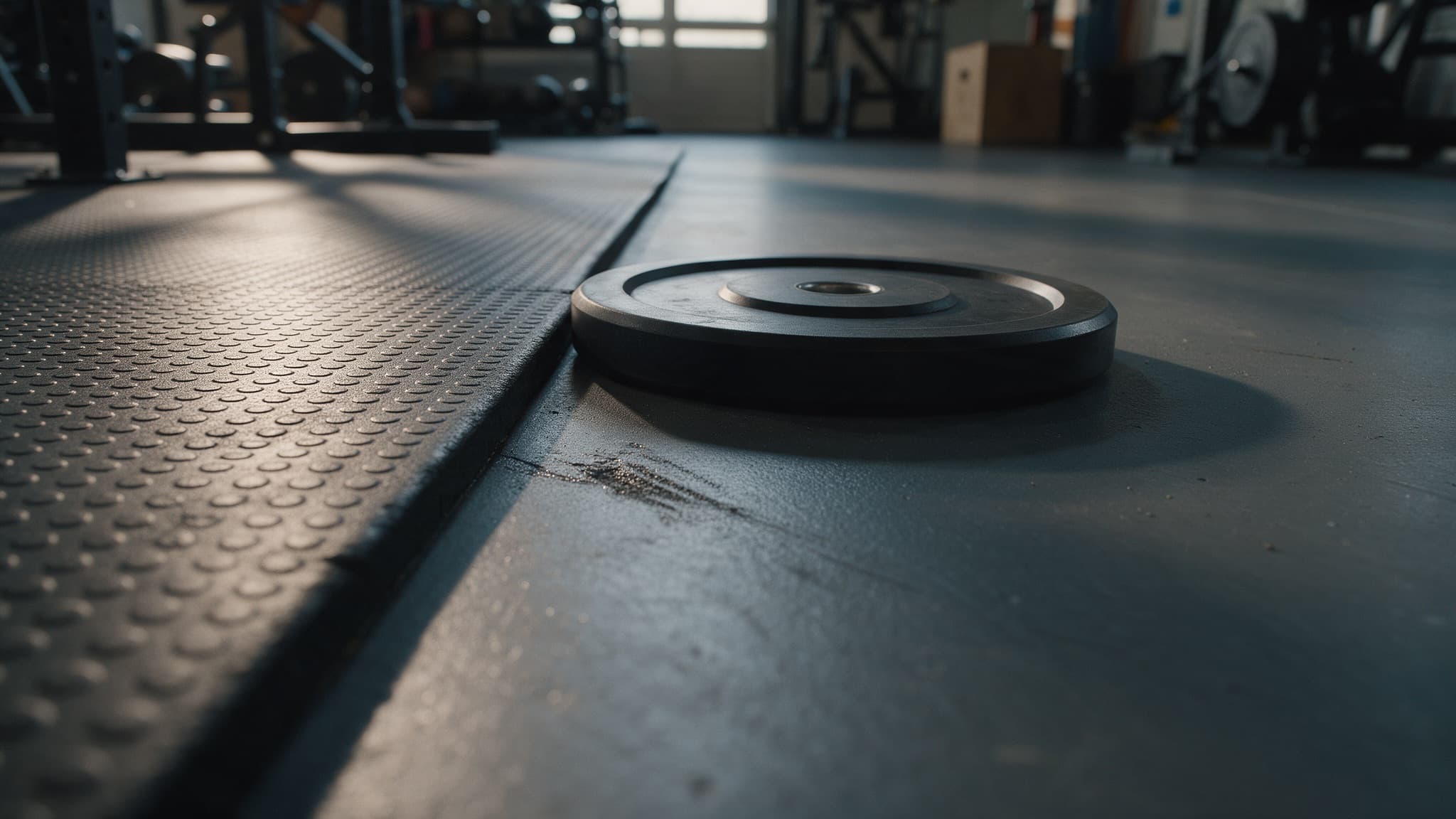
The boundary between rubber and coating is where damage starts. Plan it generously, because lifters do not aim
Where We Would Say Polished Instead
In a large facility with a sound slab and no chemical exposure, polished concrete at $4–10 per square foot is worth considering for the open floor. It cannot delaminate because there is no film, it has no recoat cycle, and it takes equipment traffic indefinitely. The trade is that it stains, so it is a poor fit near a juice bar or anywhere drinks are routine.
It is also unforgiving of a slab with patch repairs, because polishing exposes whatever is already there rather than covering it. On a older Charlotte warehouse conversion with a chequered slab history, a coating gives you a uniform floor that polishing cannot.
Send us your floor plan with the rack and platform positions marked and we will tell you which zones need rubber and which do not, including where you can spend less than you expected. Free across the Charlotte metro, phased so you stay open.
Get Free EstimateFrequently Asked Questions
Related Guides
Share this guide: