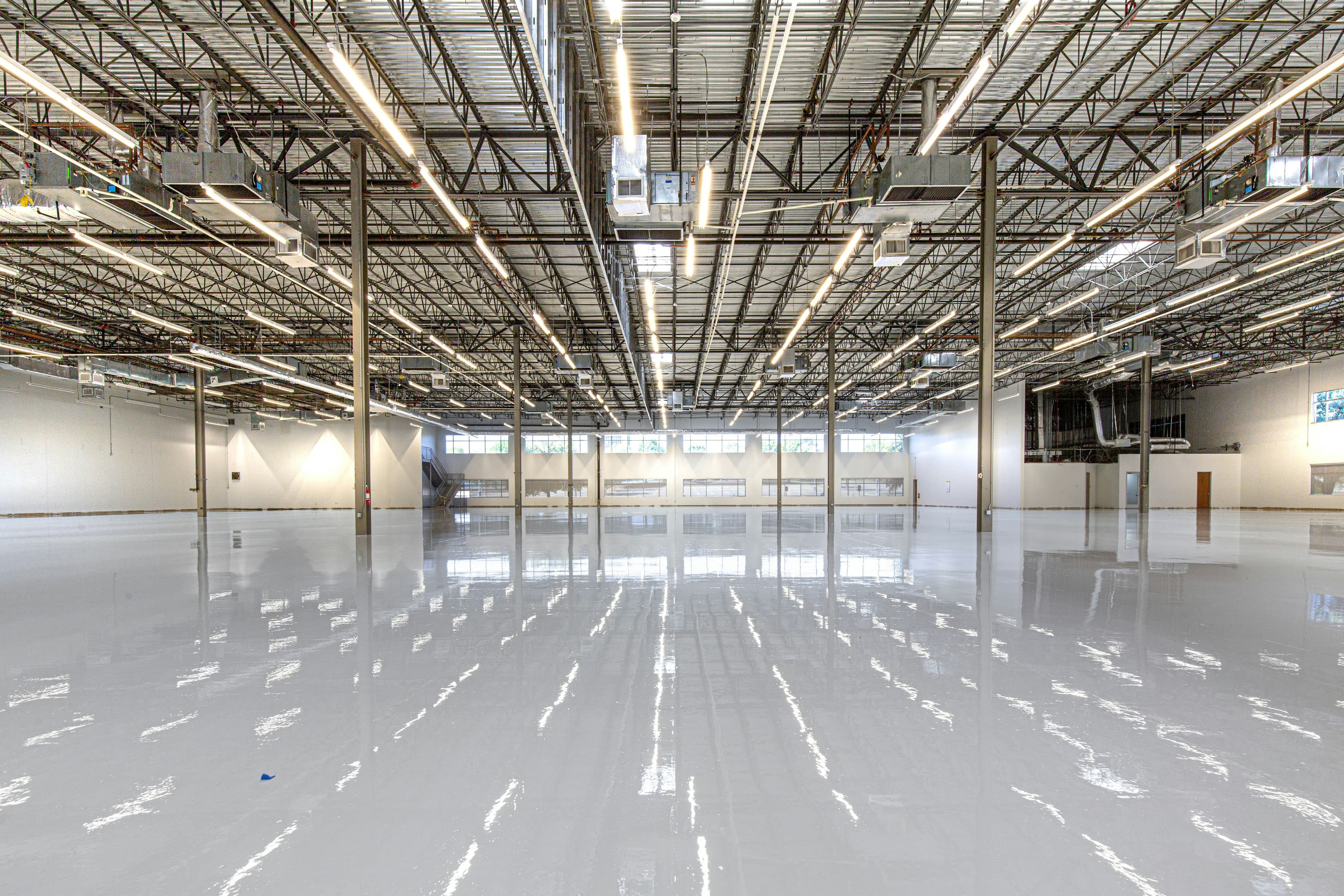
Commercial epoxy flooring in Charlotte costs $2–$8 per square foot for most systems, with speciality installs — commercial kitchens, labs, anti-static rooms — running $7–$14/sqft. A 20,000 sqft warehouse typically lands between $50,000 and $100,000. Volume pricing applies above 5,000 sqft; our commercial minimum invoice is $2,500. The variable that surprises most facility managers is not the coating — it is downtime, covered in full below.
Commercial Epoxy Cost by System — Charlotte 2026
| System | Cost/sqft | Service Life | Best For |
|---|---|---|---|
| Single-coat epoxy sealer | $2–$3 | 3–7 yrs | Storage, low-traffic warehouse, dust control |
| Two-coat epoxy (roll-on) | $3–$5 | 7–12 yrs | Warehouse, distribution, back-of-house |
| Epoxy + polyaspartic topcoat | $4–$7 | 10–15 yrs | Forklift traffic, manufacturing |
| Decorative flake or quartz | $4–$8 | 10–15 yrs | Retail, showrooms, lobbies, gyms |
| Urethane cement (thermal shock) | $8–$14 | 15–20 yrs | Commercial kitchens, wash-down areas |
| ESD / anti-static system | $7–$12 | 10–15 yrs | Electronics assembly, labs, server rooms |
All prices USD installed in the Charlotte metro. Includes mechanical surface prep, crack and joint treatment, and the coating system. Volume pricing above 5,000 sqft. Commercial minimum invoice $2,500.
What It Costs by Facility Size
| Facility | Area | Installed Range |
|---|---|---|
| Small retail or office suite | 2,000 sqft | $6,000–$14,000 |
| Restaurant kitchen | 1,200 sqft | $9,600–$16,800 |
| Light industrial bay | 5,000 sqft | $15,000–$30,000 |
| Distribution warehouse | 20,000 sqft | $50,000–$100,000 |
| Large fulfilment facility | 50,000 sqft | $110,000–$225,000 |
Cost per square foot drops as area grows — mobilisation, containment, and setup are largely fixed. The kitchen line is higher per foot because urethane cement and cove base are specified.
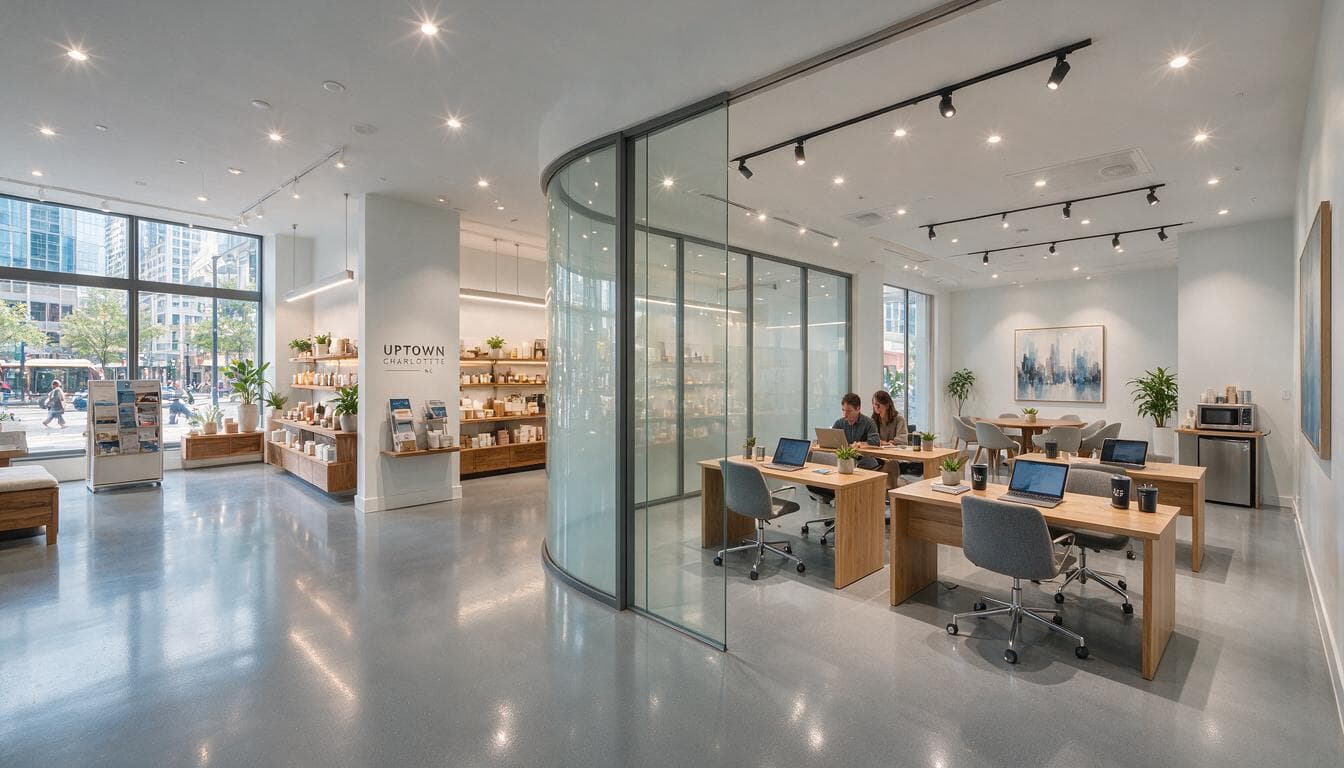
Customer-facing space in Uptown Charlotte — decorative systems cost more per foot because the finish is part of the brand
Downtime: The Cost Nobody Puts in the Quote
For a warehouse doing meaningful daily throughput, a lost operating day can cost more than the entire flooring project. That is why the first question we ask on a commercial walkthrough is not what finish you want — it is what hours the building can give us.
Here is the honest sequence for a standard commercial epoxy install, so you can plan around it rather than discover it:
Day 0 — Clear and protect
Racking, inventory, and equipment moved out of the work zone. Containment walls and floor protection installed at the boundary so dust does not migrate into the operating side of the building. On phased projects this is repeated for each zone.
Day 1 — Grind and repair
Diamond grinding with vacuum-shrouded equipment, joint and crack repair, spall patching. This is the dustiest and loudest stage. Facilities that cannot tolerate it during business hours are the ones we schedule for nights.
Day 2 — Prime and base coat
Moisture-mitigating primer where slab testing calls for it, then the base coat. Zone is closed to all traffic through cure — typically overnight.
Day 3 — Topcoat
Clear topcoat or decorative broadcast plus seal. Foot traffic generally returns 12–24 hours later.
Day 5–7 — Full service
Racking reloaded, forklifts back on the floor, full chemical resistance reached. Coatings gain strength for several days after they are walkable — loading heavy equipment early is the single most common way a good install gets damaged.
Three ways to buy your downtime back: phase the floor in zones (adds 10–20% to cost, keeps the facility running); run nights and weekends (premium labour rate, typically 15–25%); or specify a fast-cure polyaspartic system that is walkable the same evening (higher material cost per foot, shortest closure). Which is cheapest depends entirely on what an hour of closed floor costs your operation — and you know that number better than we do.
What Moves a Commercial Quote Up or Down
↑ Existing floor covering removal
VCT, carpet tack strip, cured sealers. $1–$3/sqft depending on how well it is stuck down.
↑ Slab moisture mitigation
Adds $0.50–$0.75/sqft. Tested before quoting, not discovered mid-install.
↑ Phasing or after-hours work
10–25% premium. Almost always cheaper than the lost operating time it prevents.
↑ Joint and crack repair
Heavily jointed or cracked industrial slabs add real labour before any coating goes down.
↑ Line striping and safety markings
Quoted separately — pedestrian lanes, racking layout, hazard zones.
↓ Over 5,000 sqft
Volume pricing applies. Fixed setup costs spread across more area.
↓ Clean, bare, sound slab
New construction with nothing to demolish is the cheapest possible start.
↓ Empty building
No racking to move, no containment, no phasing. Vacant tenant space is the fastest work there is.
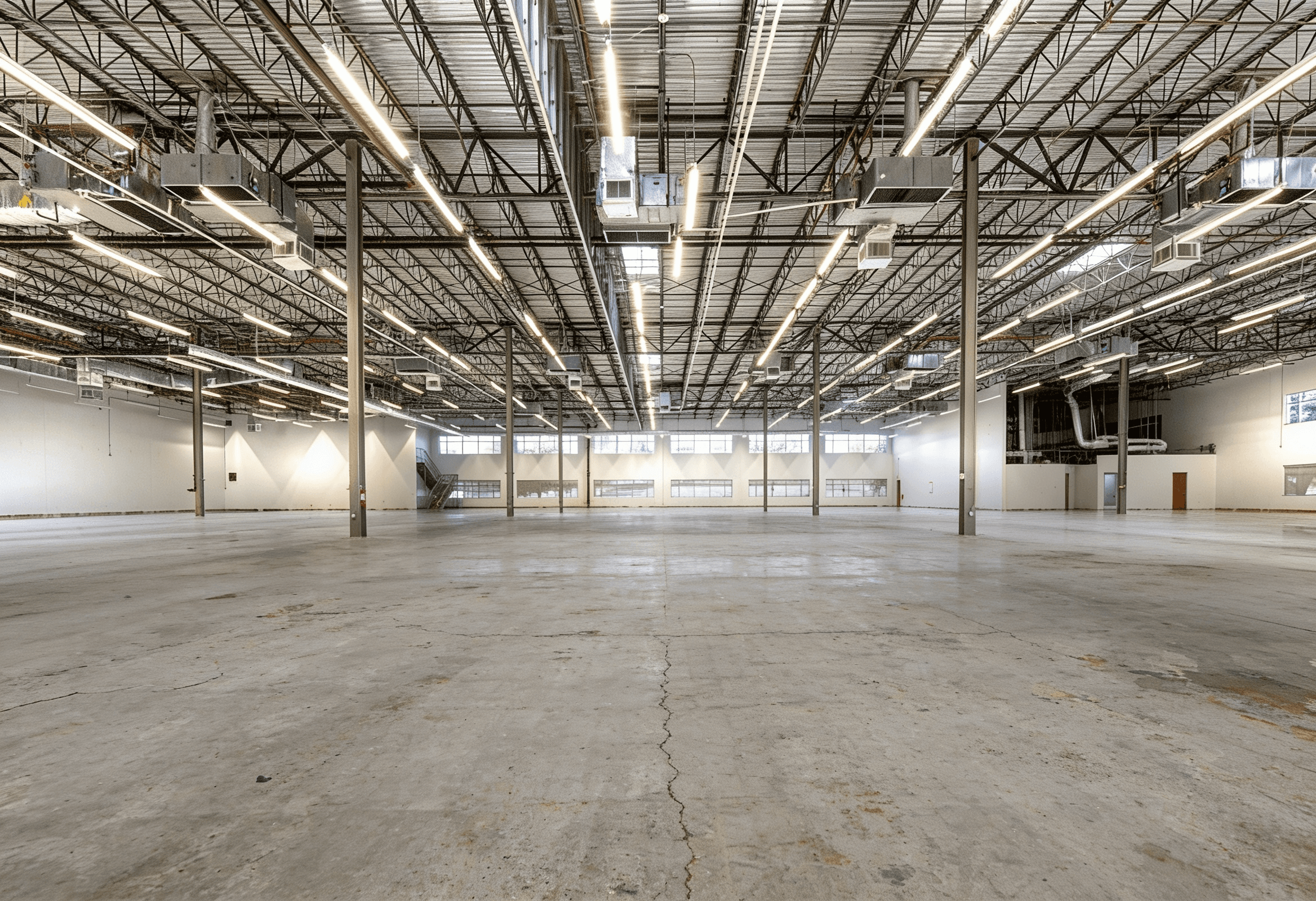
A vacant Charlotte metro warehouse before work — cracking, staining, and a joint running the length of the slab all get priced before a coating is quoted
Charlotte Commercial Project Costs — Real Numbers
Steele Creek distribution warehouse
18,000 sqft · Two-coat epoxy with polyaspartic topcoat, phased in 4 zones
Ran in four zones across two weekends so the operation never stopped. Phasing added roughly 14% versus a single continuous pour, and the client kept every shipping day.
South End restaurant kitchen
1,150 sqft · Urethane cement with integral cove base
Thermal-shock resistant system specified because of steam cleaning and boiling spillage. Installed across a Sunday–Monday closure with zero lost service.
“Health inspector commented on it. That is the first time a floor has ever helped us.”
Ballantyne office fit-out
3,400 sqft · Decorative flake, light grey blend
Tenant improvement on a new build. Clean slab, no removal, no mitigation needed — the cheapest starting condition there is.
Concord manufacturing floor
9,500 sqft · Epoxy with polyaspartic topcoat, safety lane striping
Forklift traffic and pallet jack wear drove the topcoat spec. Striping for pedestrian lanes quoted separately at $2,100.
The Cost of Leaving a Commercial Slab Bare
Bare concrete in a working facility is not a neutral choice — it has running costs. It sheds dust continuously, which lands on inventory and gets pulled into equipment. It absorbs oil, hydraulic fluid, and cleaning chemicals permanently, so the floor gets darker and harder to clean every year. And unsealed concrete under forklift traffic spalls at the joints, which turns into a repair bill an order of magnitude larger than sealing it would have been.
There is also a lighting argument that facility managers consistently underrate. A light-coloured coated floor reflects a meaningful share of overhead light back into the space. On several Charlotte warehouse projects the client has been able to run fewer fixtures for the same working light level after coating. That does not pay for the floor on its own, but it is a real line item that never appears in the flooring quote.
Free commercial site assessment across the Charlotte metro — slab moisture testing, a phasing plan built around your operating hours, and a fixed written quote. Certificates of insurance provided before mobilisation.
Request Commercial QuoteFrequently Asked Questions
Related Guides
Share this guide: