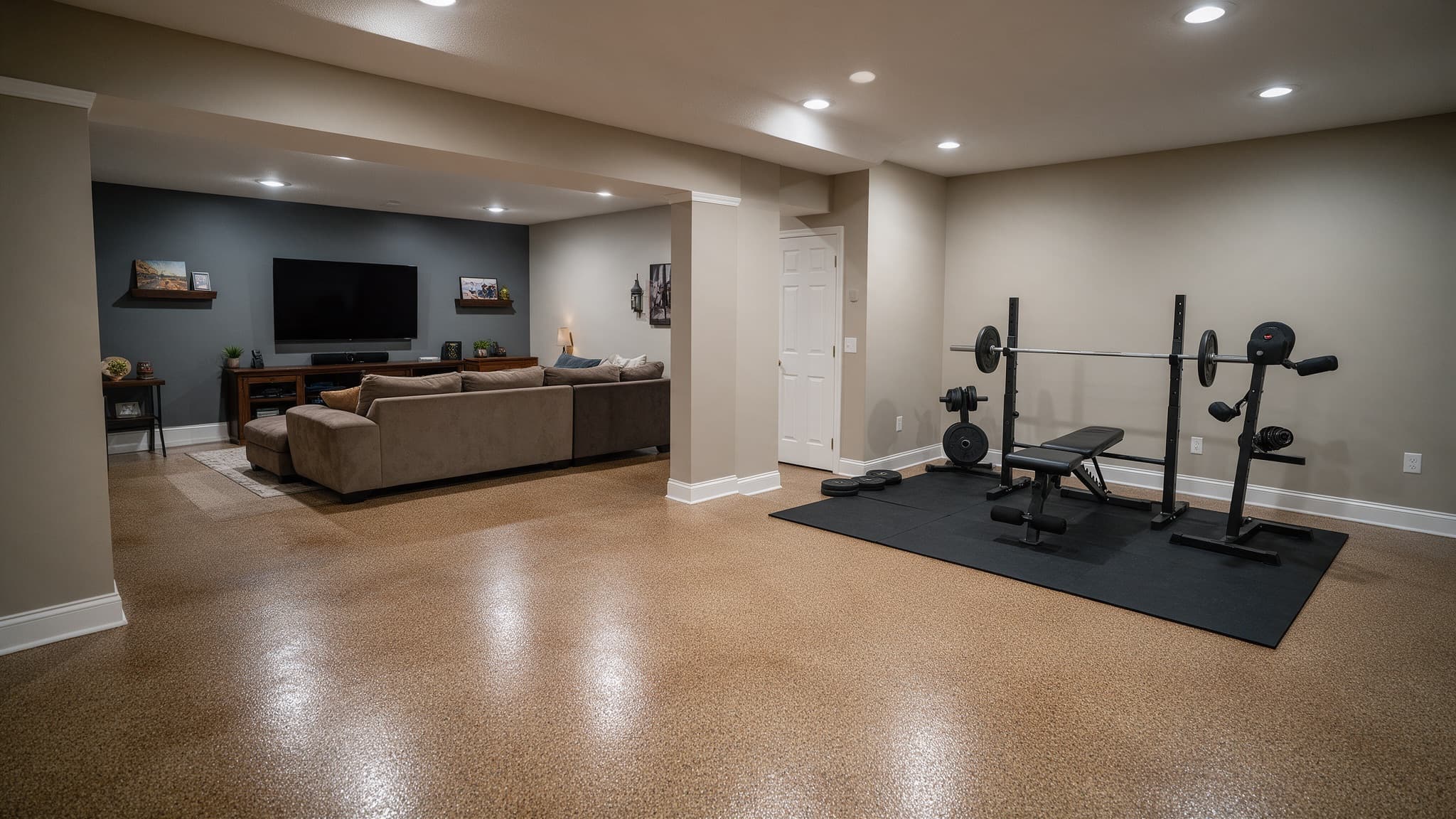
In Charlotte, coated concrete beats anything with a cavity underneath it. Piedmont clay drives vapour up through below-grade slabs, and carpet, floating floors, and engineered wood all give that moisture somewhere to collect. A bonded coating does not. But the order matters: test slab moisture first, then choose the finish. A reading above 75 to 80 percent means a mitigating primer at $0.50–0.75 per square foot before anything else.
The Options, Judged on Moisture First
| Option | Cost | Moisture Tolerance | Notes |
|---|---|---|---|
| Flake coating | $5–8/sqft | Excellent | Hides dust, warm underfoot, zones well |
| Solid colour epoxy | $4–7/sqft | Excellent | Cleanest look, shows more marks |
| Polished concrete | $4–10/sqft | Excellent | No film at all, but stains |
| Metallic epoxy | $9–12/sqft | Excellent | Feature spaces, shows scratches |
| Carpet over slab | Varies | Poor | Traps vapour, holds odour after any event |
| Floating LVP or engineered | Varies | Fair to poor | Cavity underneath, needs a vapour barrier |
Moisture tolerance assumes the slab was tested and primed where the reading called for it. Untested, every row drops a grade.
Five Ideas That Work Below Grade
Test the slab before choosing anything
Every option above is viable on a dry slab and several are poor choices on a wet one, so the reading comes first and the design follows. Probes into the slab, left to equilibrate, read as internal relative humidity. On Charlotte clay lots, particularly below grade, this reading decides more about the project than taste does.
Zone with colour, not with thresholds
Most Charlotte basements end up doing three jobs at once: living space, gym, storage. You can mark those zones with different flake blends or a change from flake to solid colour, while the coating itself runs unbroken across the whole slab. No transition strips means nothing to trip on, nothing to trap grit, and nothing for moisture to collect under.
Go warmer than you would upstairs
Basements have no daylight and usually a lower ceiling, and cool grey finishes that look sharp in a garage can read cold and cavernous below grade. Tan, warm brown, and mid-tone blends with a warm base make a basement feel like a room rather than a utility area. This is the most common course correction we see people make after seeing samples in the actual space.
Put the gym zone where the slab is soundest
Dropped weights are point impacts and will chip any coating over a weak or spalled area of slab. If part of the basement floor has patch repairs or surface damage, plan the lifting area elsewhere and use that zone for storage or seating instead. Rubber over the coating in the lifting area handles the rest.
Decide the cove detail deliberately
A coved base carries the coating a few inches up the wall in one continuous curve, which costs $8–12 per linear foot and is worth it in a basement where you want to mop into corners or where water has reached the floor before. In a dry finished basement with baseboard and drywall, a square stop at the wall is usually the right call.
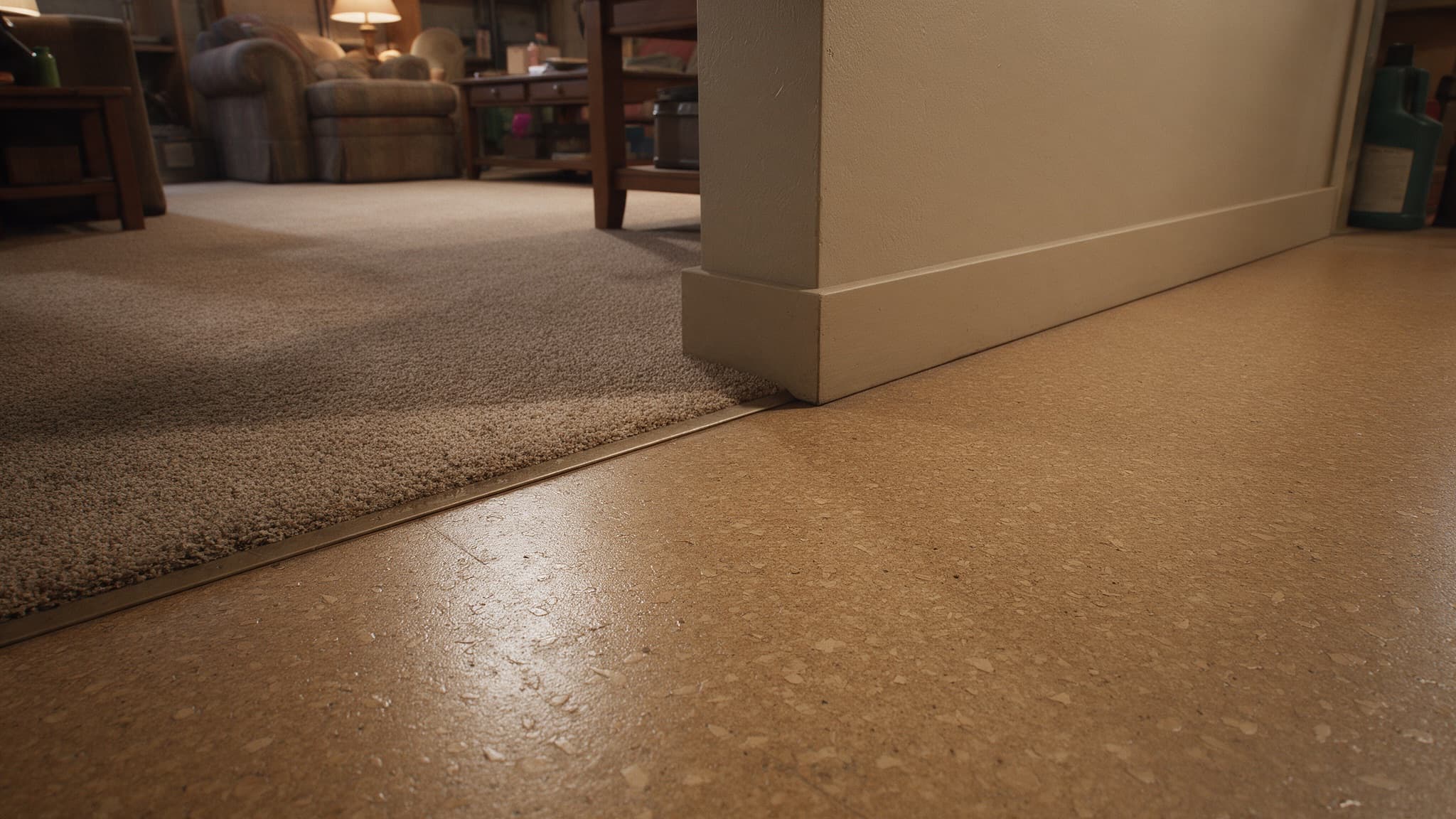
Where a rug or carpet zone meets the coating, keep the coating continuous underneath rather than stopping it at the edge
The Part People Skip
Almost every basement floor failure we are called out to in Charlotte traces back to water that was never addressed outside the house. Downspouts discharging within a few feet of the foundation, ground sloping toward the building, and blocked or collapsed perimeter drains all keep clay soil cycling between saturated and dry, and that cycle pushes vapour up through the slab for as long as it continues.
Fixing drainage is unglamorous, it is usually cheaper than the floor, and it is frequently the actual repair. We would rather tell you to extend a downspout and re-grade a flower bed before we take a deposit than coat over the problem and be back in eighteen months looking at blisters.
If the slab reads dry and the drainage is sound, almost any option in the table above will work and the decision becomes a genuine design choice. That is the position worth getting to before anyone talks about colour.
We test slab moisture at the estimate and will tell you plainly if the honest first step is drainage rather than flooring. Free across the Charlotte metro.
Get Free EstimateFrequently Asked Questions
Related Guides
Share this guide: