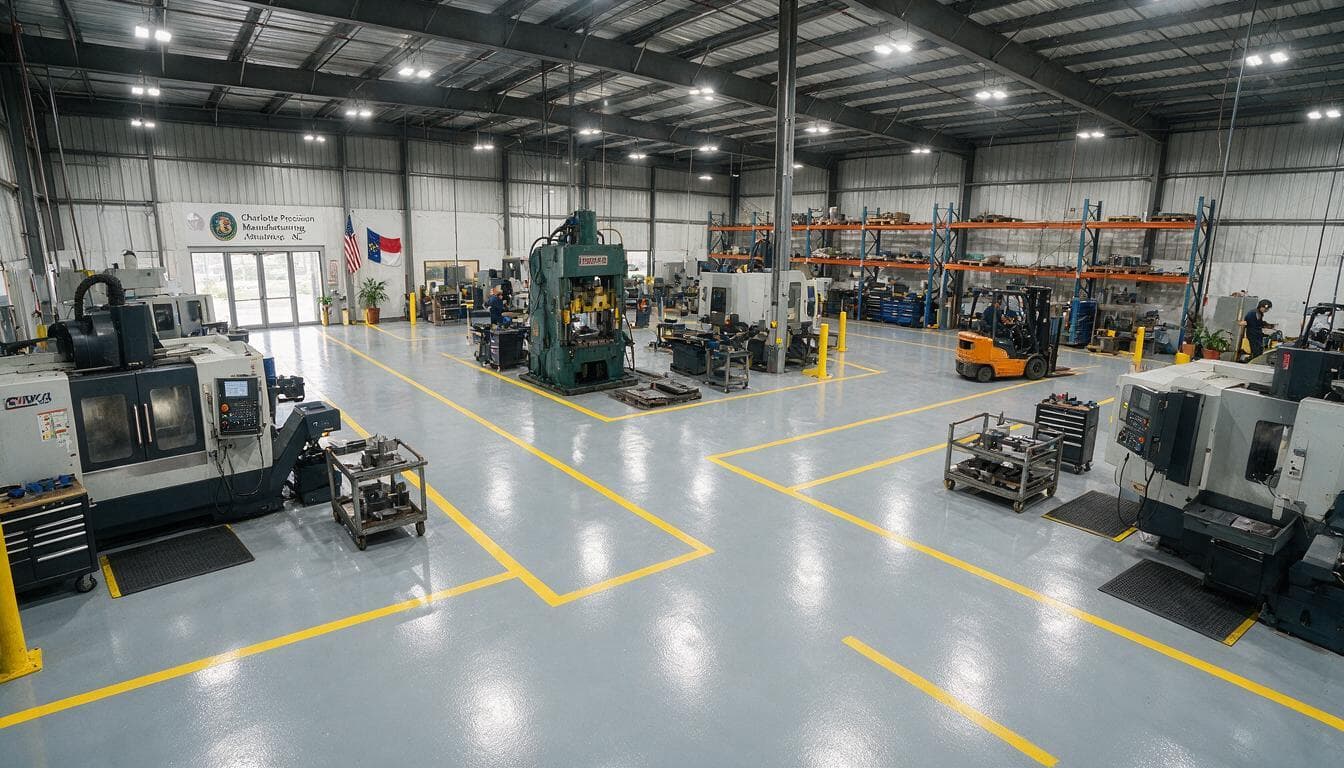
Manufacturing Floor
Coatings in Charlotte, NC
Spec-grade epoxy and urethane cement systems for Charlotte manufacturing and factory facilities. Chemical resistant. Forklift rated. Installed around your shift schedule.
What Manufacturing Floors Actually Need
Chemical resistance
Cutting fluids, lubricants, hydraulic oil, solvents — standard residential epoxy fails under sustained industrial chemical exposure within months.
Impact and abrasion
Dropped tooling, pallet jacks, forklifts, and heavy foot traffic from a full shift crew — the floor needs rated impact and abrasion resistance, not decorator-grade coating.
Safety striping
OSHA aisle markings, forklift lanes, emergency paths, and hazard zones are a compliance requirement, not an aesthetic choice.
Schedule certainty
Manufacturing floors go in around your production schedule — nights, weekends, or phased sections — with a timeline committed in writing.
Recommended Systems for Charlotte Manufacturing
100% Solids High-Build Epoxy
$4–8/sqft installed
For light-to-medium manufacturing. 12–20 mil DFT. Chemical resistant to most industrial fluids. Forklift-rated when specified at correct thickness. Polyaspartic or urethane topcoat for additional abrasion resistance. Most Charlotte manufacturing installs use this system.
Urethane Cement
$8–14/sqft installed
For heavy chemical exposure, thermal cycling, or wet process areas. Bonds to damp concrete — critical in older Charlotte industrial buildings. 3–5mm build. More impact-flexible than epoxy. The correct specification for aggressive manufacturing environments.
Safety Striping — Included in Every Scope
OSHA 1910.22 aisle and passageway marking standards — yellow for forklift and aisle lanes, red for fire equipment zones, white for storage boundaries, orange for caution areas. All striping applied as a separate step after base coat cure — never taped into wet epoxy. Go Epoxy Charlotte provides a striping plan for client approval before any markings are applied.
Installation Around Your Production Schedule
Phased installation plan built around your shift schedule. Nights and weekends standard. Typical Charlotte manufacturing install: 2,000–8,000 sqft over 3–5 nights. Larger facilities planned by bay or zone. Written schedule committed before work begins — not a rough estimate.
Charlotte Project Reference
6,000 sqft light machining facility in the I-85 corridor. High-build epoxy, 16 mil DFT, urethane topcoat, and full OSHA striping package. Installed over 4 nights around a two-shift production schedule. Zero production days lost.
Manufacturing Floor Coating FAQ
What epoxy thickness is required for forklift traffic in a Charlotte manufacturing facility?
Most forklift-rated epoxy floor specifications call for a minimum 12–16 mil DFT (dry film thickness) of 100%-solids epoxy, with a urethane or polyaspartic topcoat for abrasion resistance. We confirm the correct thickness specification at the site assessment based on forklift weight, traffic frequency, and slab condition.
Can you install manufacturing floor coating in an active Charlotte facility?
Yes — phased installation is standard for active facilities. We section the floor and coat one zone at a time while production continues in adjacent areas. Each section cures overnight before the next phase begins. Written phasing plan provided for approval before any work starts.
Do you provide safety striping with the floor coating?
Yes — OSHA-compliant safety striping is included in every industrial floor scope. Aisle markings, forklift lanes, hazard zones, and emergency paths. Striping plan submitted for client approval before application.
Ready to Spec Your
Manufacturing Floor?
Free site assessment. Written specification. Phasing plan around your production schedule.