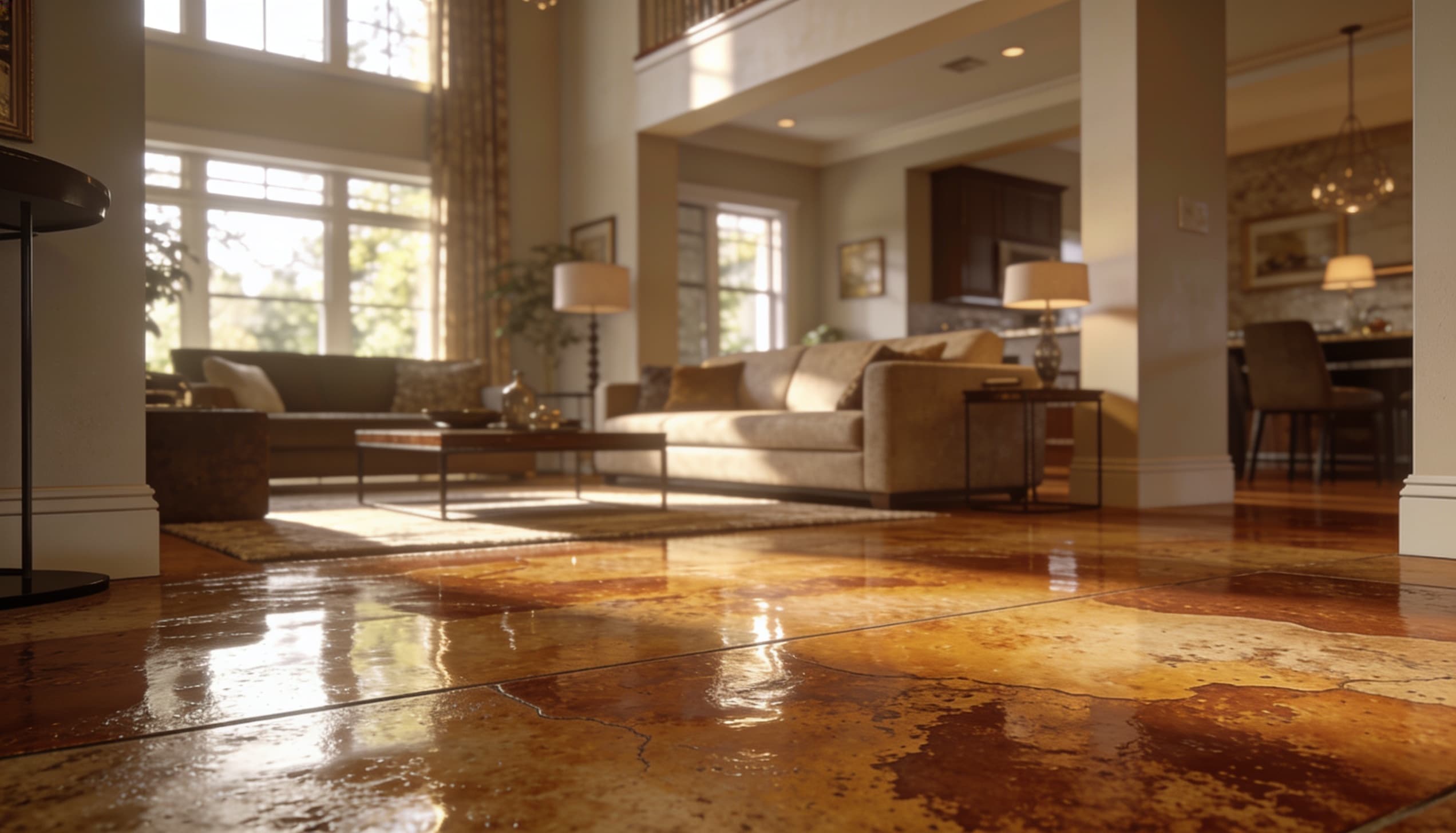
Choose stained concrete for interior living space on a sound, attractive slab where you want warmth and an organic, one-off look — $3–$8/sqft, resealed every 1–3 years. Choose epoxy for garages, workshops, basements, and any commercial space, or wherever the slab has been repaired — $4–$8/sqft, recoated every 7–15 years. The deciding question is usually not taste. It is whether your concrete is in good enough condition to be shown off.
Stained Concrete vs Epoxy — Side by Side
| Stained Concrete | Epoxy Coating | |
|---|---|---|
| What it is | Colour penetrating into the slab | Resin coating built on top |
| Cost installed | $3–$8/sqft | $4–$8/sqft residential |
| Thickness added | None (sealer only) | 20–40 mils |
| Hides slab damage | No — highlights it | Yes, especially with flake |
| Colour options | Earth tones, translucent, variegated | Any colour, opaque, consistent |
| Chemical resistance | Low — depends on sealer | High |
| Maintenance cycle | Reseal every 1–3 yrs | Recoat every 7–15 yrs |
| Can it peel | Sealer can, colour cannot | Yes if prep was poor |
| Look | Organic, mottled, no two alike | Controlled and repeatable |
Charlotte metro pricing, USD installed. Both figures include surface preparation and the finish system.
The Difference That Decides It: In the Slab vs On the Slab
Stain is translucent by design. Acid stain reacts with the free lime in the concrete and produces mottled, variegated earth tones that no two slabs render identically — that unpredictability is the entire appeal. But translucency cuts both ways: whatever is already in your concrete shows through the finished floor. Patched cracks, old adhesive shadows, spots where a car leaked for a decade, the colour difference where a second load of concrete was poured. Staining does not hide any of it. It puts a coloured glaze over the top and often makes the variation more legible.
Epoxy is opaque and builds a new surface at 20–40 mils. With a flake broadcast, it hides everything underneath and gives you a controlled, repeatable result. That is why almost every garage floor in Charlotte gets coated rather than stained — garage slabs are working surfaces with histories, and very few of them are attractive enough to want to see.
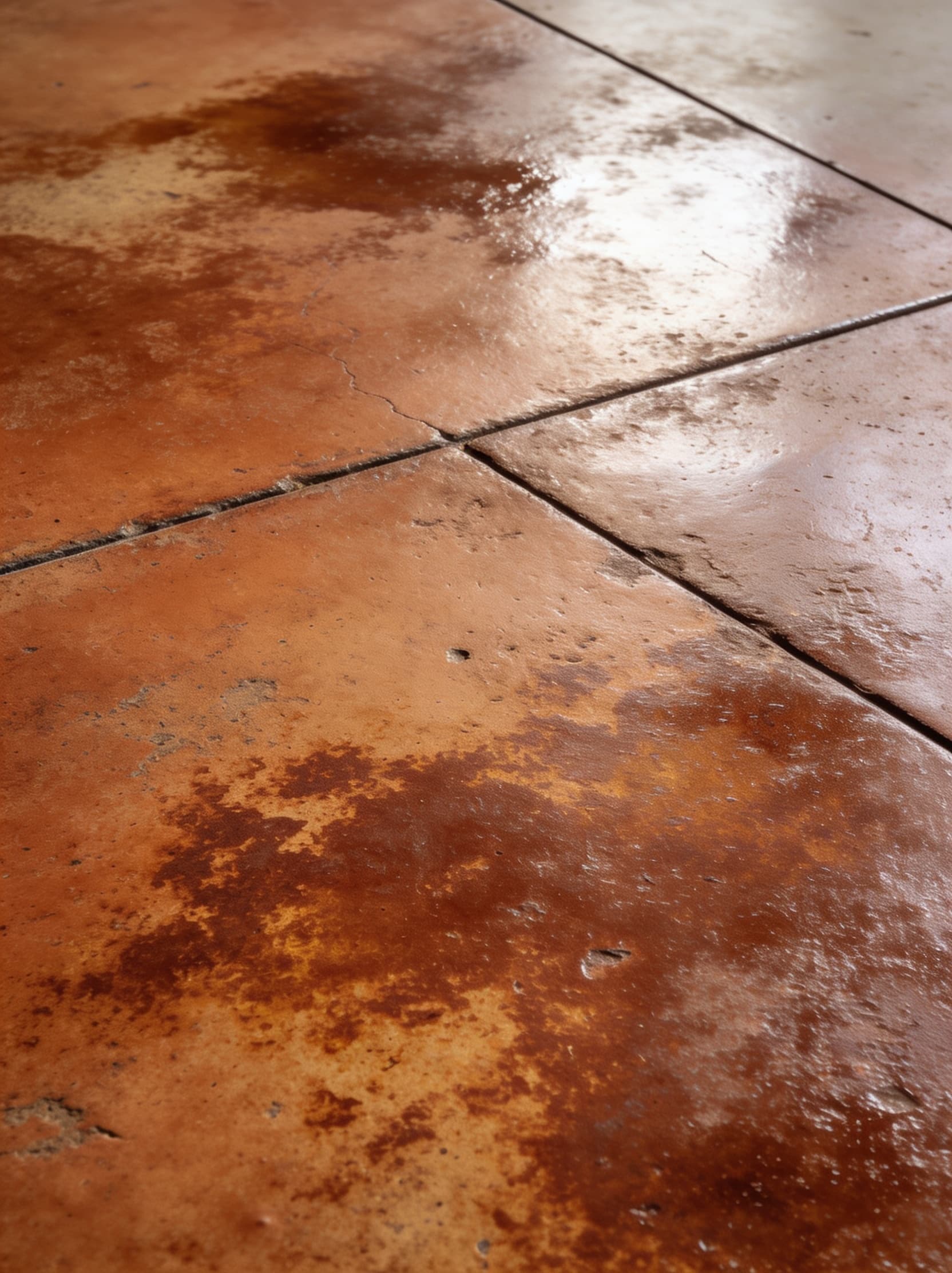
Stain detail — the mottling comes from the concrete's own chemistry reacting with the stain, which is why it cannot be exactly reproduced
When Stained Concrete Is the Right Answer
Interior living space
Living rooms, dining areas, and sunrooms where the floor should read as warm and organic rather than industrial. This is where stain is genuinely the better product.
A sound, attractive slab
New or well-preserved concrete with no patching. Stain rewards a good slab and punishes a bad one.
Patios and covered porches
Exterior stain with a breathable sealer handles UV and moisture vapour better than most film-forming coatings.
Budget-driven refresh
Water-based stain on a clean slab is one of the cheapest ways to make a bare concrete floor look intentional.
When Epoxy Is the Right Answer
Garages and workshops
Hot tyres, dropped tools, oil drips. Stain cannot handle any of it; epoxy is built for exactly this.
Any slab that has been repaired
Patches and crack fills disappear under a flake epoxy system and stand out under stain.
Commercial and food service
Chemical resistance, cleanability, and cove base at the wall are all things a coating gives you and a stain does not.
Basements with moisture activity
A moisture-mitigating primer under an epoxy system manages vapour drive. Stain has no equivalent.
Wet areas needing grip
Anti-slip additive goes into an epoxy topcoat. Sealed stain in a wet area is genuinely slippery.
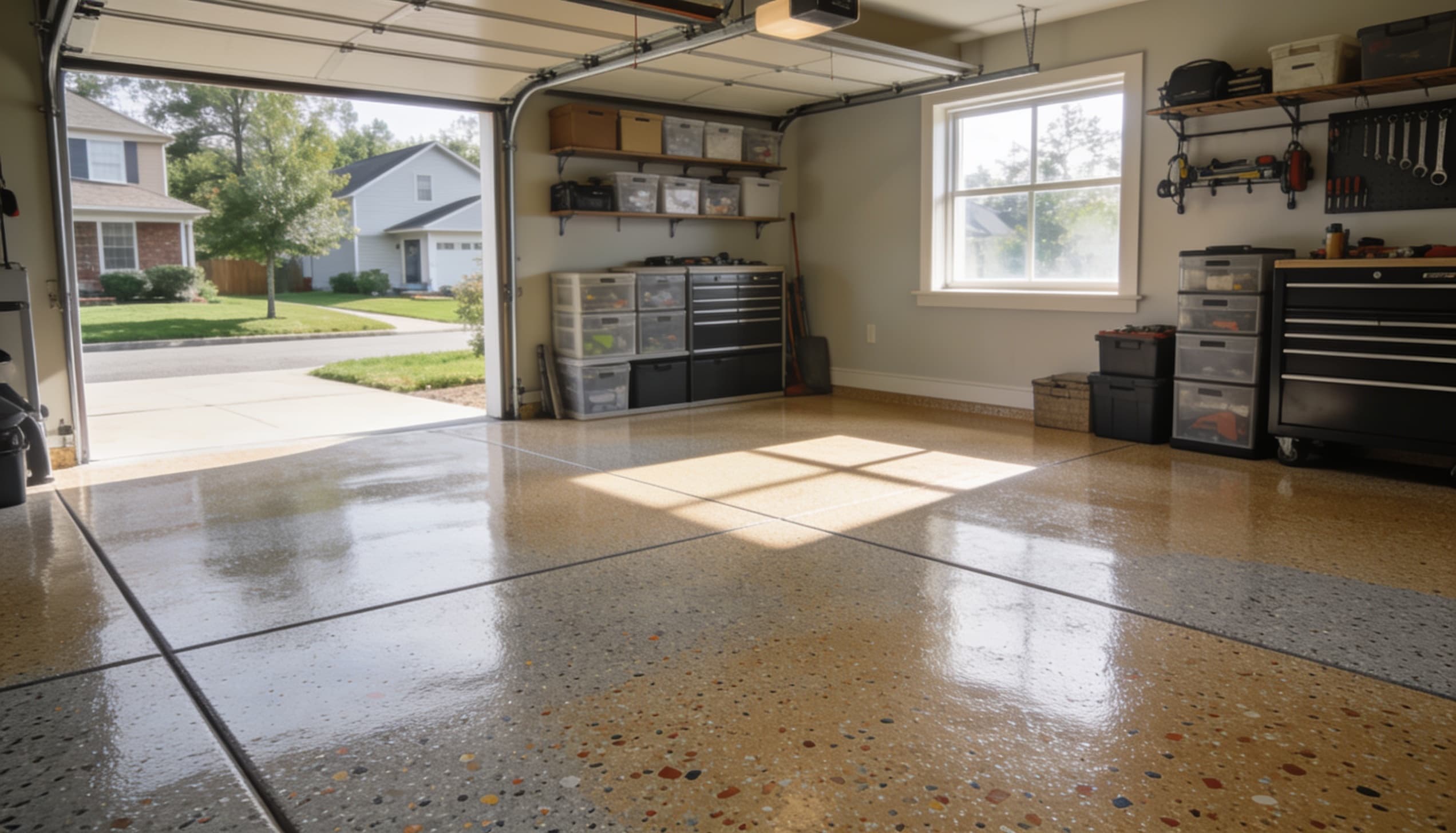
A flake epoxy system in a Charlotte metro garage — opaque, chip-textured, and indifferent to what the slab looked like underneath
The Maintenance Difference People Underestimate
Stained concrete is often sold as low maintenance because the colour is permanent. The colour is — the sealer is not. In a Charlotte living space with normal foot traffic, a topical sealer over stain wants reapplying every 1–3 years, and the reapplication is not trivial: the floor has to be cleaned, sometimes stripped, and recoated with furniture moved out. Over fifteen years that is five to ten cycles.
An epoxy system with a polyaspartic topcoat goes 7–15 years before it needs anything beyond sweeping and mopping. If you are comparing total effort rather than upfront price, that gap matters more than the couple of dollars per square foot between them. That said, when the sealer on a stained floor does fail, the floor underneath is still fine — you are recoating, not replacing. When a badly prepped epoxy floor fails, it has to be ground off. Different risk shapes, not simply better and worse.
Not sure whether your slab is a candidate for staining? That question can only be answered by looking at the concrete. Free on-site assessment across the Charlotte metro — we will tell you honestly if staining would show more than it hides.
Get Free EstimateFrequently Asked Questions
Related Guides
Share this guide: