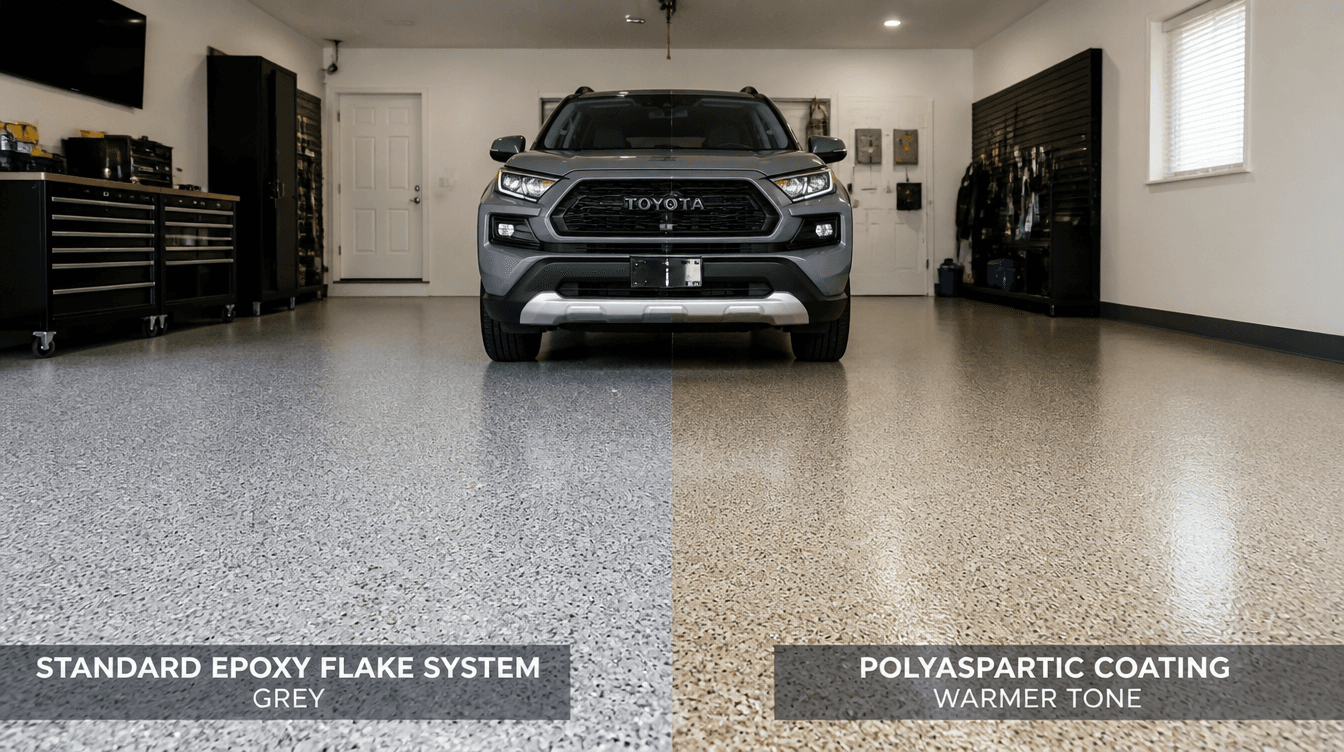
Quick Verdict — The Comparison Table
Every system has a use case. Here's how they stack up across the metrics that matter for a Charlotte garage.
| Factor | Epoxy | Polyaspartic | Polyurea |
|---|---|---|---|
| Cure time | 24–72 hours | 4–8 hours | 1–2 hours |
| UV stability | Yellows outdoors | UV-stable | UV-stable |
| Install time | 2 days | 1 day | 1 day |
| Durability | High | Very high | Very high |
| Charlotte temp range | 50°F–90°F | 0°F–120°F | 0°F–140°F |
| Slip resistance | Moderate (additive needed) | High (textured topcoat) | High |
| Cost per sqft | $3–$7 | $5.50–$8 | $6–$10 |
| DIY available | Yes (kit) | No | No |
| Best for | Budget residential | Most Charlotte garages | Commercial, heavy-duty |
Our recommendation for most Charlotte homeowners: polyaspartic base + polyaspartic topcoat, installed in one day. UV-stable, fast-curing, and priced within $1–$2/sqft of standard epoxy. The 1-day install is the deciding factor for most people with an active household.
See polyaspartic pricingEpoxy — The Standard System
Epoxy floor coating is a two-part system — resin and hardener that chemically bond when mixed and applied to concrete. Once cured, it creates a hard, durable surface that's significantly tougher than bare concrete. It's been the standard residential garage coating for 30+ years for good reason: it's durable, affordable, and available in hundreds of decorative chip and color options.
Where epoxy falls short is UV exposure and install logistics. Standard epoxy is formulated with aromatic compounds that degrade under ultraviolet light — the same chemistry that makes it strong indoors makes it yellow, chalk, and dull when exposed to sunlight. For Charlotte garages with south-facing doors or natural light, this is not a minor cosmetic issue. It's a system failure that typically appears within 18 months of installation.
- ✓Lowest cost entry point — $3–$7/sqft
- ✓Widest range of chip colors and decorative options
- ✓Excellent chemical resistance for auto shops and hobbyists
- ✓Deep build coat fills surface imperfections well
- ✓Proven 20+ year track record in residential garages
- ✗UV-reactive — yellows and chalks within 1–3 years if exposed to sunlight
- ✗2-day install minimum — base coat cure before topcoat
- ✗Temperature sensitive during install — below 55°F causes adhesion issues
- ✗Charlotte's humidity can affect cure time if moisture testing is skipped
Charlotte's south-facing garages see significant UV exposure through open doors in summer. Standard epoxy without an aliphatic or polyaspartic topcoat will yellow — typically within 18 months.
Polyaspartic — The 1-Day System
Polyaspartic is technically a type of aliphatic polyurea — a UV-stable polymer that was developed in the 1990s as a faster, more weather-resistant alternative to standard epoxy. The chemistry is meaningfully different: where epoxy uses aromatic compounds (UV-reactive), polyaspartic uses aliphatic compounds that don't degrade under ultraviolet light. The result is a coating that looks the same on day 1 and year 5.
The 1-day install matters more than most homeowners initially realize. Epoxy requires base coat cure overnight before a topcoat can be applied — meaning the garage is blocked for two full days minimum. With polyaspartic, base and topcoat both go down on the same day. Most Charlotte residential installs are complete and walkable by evening. For households with a daily-use garage, this is the practical difference between a realistic project and one that gets delayed indefinitely.
- ✓UV-stable — won't yellow regardless of sunlight exposure
- ✓1-day install — base and topcoat same day, walkable same evening
- ✓Cure range 0°F–120°F — installs in Charlotte winter or summer without issue
- ✓Harder final surface than standard epoxy — more scratch and abrasion resistant
- ✓Same decorative chip options as epoxy — no visual compromise
- ✗Higher cost than standard epoxy — typically $1–$2/sqft more
- ✗Faster cure means less working time — requires experienced installation
- ✗Not DIY-available — no consumer-grade polyaspartic products
For Charlotte homeowners with kids, pets, or a car they need back in the garage quickly, polyaspartic wins on convenience alone. The 1-day cure eliminates the 2-day staging problem that stops most epoxy jobs from happening.
Polyurea — The Heavy-Duty System
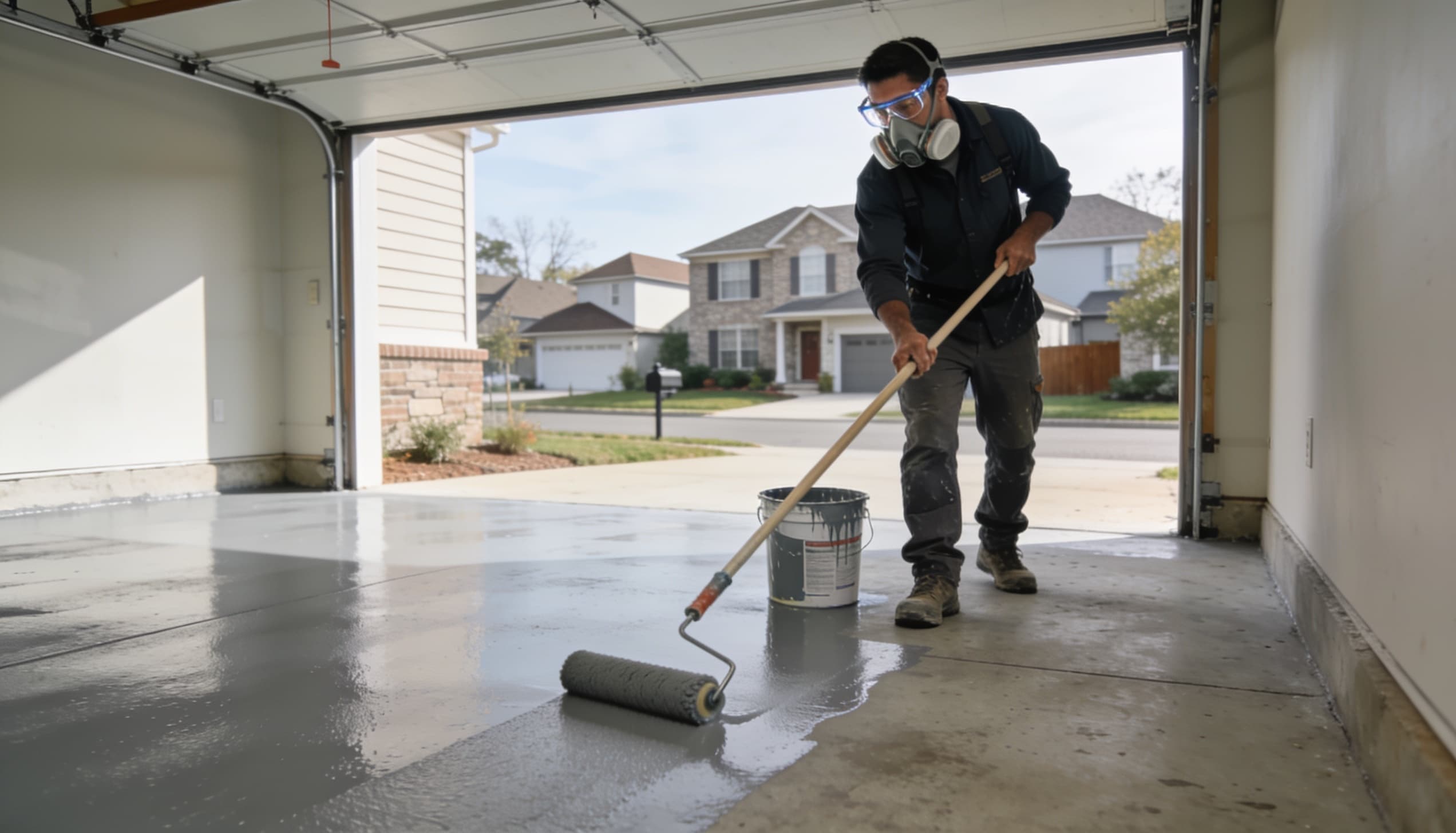
True polyurea is the parent chemistry that polyaspartic belongs to. It cures faster than any other floor coating system — sometimes in under 60 minutes — and is rated for the widest temperature install window of any system: 0°F to 140°F. Those properties make it ideal for commercial and industrial applications where speed and extreme durability are paramount.
In residential use, true polyurea is less common than its marketing suggests. The cure rate is so fast that spray application equipment is required — brush and roller won't work. That equipment requirement drives cost up and limits the decorative options available.
- ✓Fastest cure of any system — 1–2 hours, sometimes under 60 minutes
- ✓Extreme temperature range — 0°F–140°F install window
- ✓Highest durability rating — industrial and commercial applications
- ✓Chemical resistance beyond epoxy or polyaspartic
- ✗Highest cost — $6–$10/sqft and up
- ✗Extremely fast cure requires spray application equipment — not brush/roller
- ✗Trickier to achieve decorative finishes — mostly solid colors
- ✗Most residential installations marketed as "polyurea" are actually polyaspartic — verify before buying
Most Charlotte garage floor companies marketing "polyurea" are actually selling polyaspartic — the terms overlap. Polyaspartic is a subset of polyurea chemistry. Ask any installer to specify the exact product line and SDS sheet before signing.
Hybrid Systems — Epoxy Base + Polyaspartic Topcoat
The most common professional system in Charlotte isn't pure epoxy or pure polyaspartic — it's a hybrid. An epoxy base coat provides the thick build, deep adhesion, and surface fill that creates a truly durable foundation. A polyaspartic topcoat is applied over it on day 2, delivering UV stability and that hard, gloss surface. The result combines the best of both chemistries, at the cost of a 2-day install.
This is the most common professional system in Charlotte — it combines the thick build of epoxy with the UV stability and hard surface of polyaspartic. The tradeoff is 2-day install. For homeowners who can stage the garage overnight, this is the most complete system.
See full pricing for this systemWhich Is Best for Charlotte Garages?
If you…
Want the lowest cost, have a shaded garage
→ Epoxy flake system
If you…
Want 1-day install and UV stability
→ Polyaspartic system
If you…
Want maximum depth + best decorative result, can stage overnight
→ Hybrid epoxy base + polyaspartic topcoat
If you…
Commercial space or extreme-duty application
→ True polyurea
Charlotte's climate creates two specific requirements: UV exposure from south-facing garages and high summer humidity during install windows. Standard epoxy handles neither well — it yellows under UV and requires careful humidity monitoring during cure. Polyaspartic was engineered around both problems. For the majority of Charlotte homeowners — residential garage, standard use, active household — polyaspartic or hybrid epoxy/polyaspartic is the right call. The extra $1–$2/sqft pays for UV stability and a same-day install that doesn't disrupt the household.
Frequently Asked Questions
Get a Free Charlotte Garage Floor Estimate.
We install epoxy, polyaspartic, and hybrid systems across the Charlotte metro. Free on-site estimate — we'll recommend the right system for your specific garage, budget, and timeline.