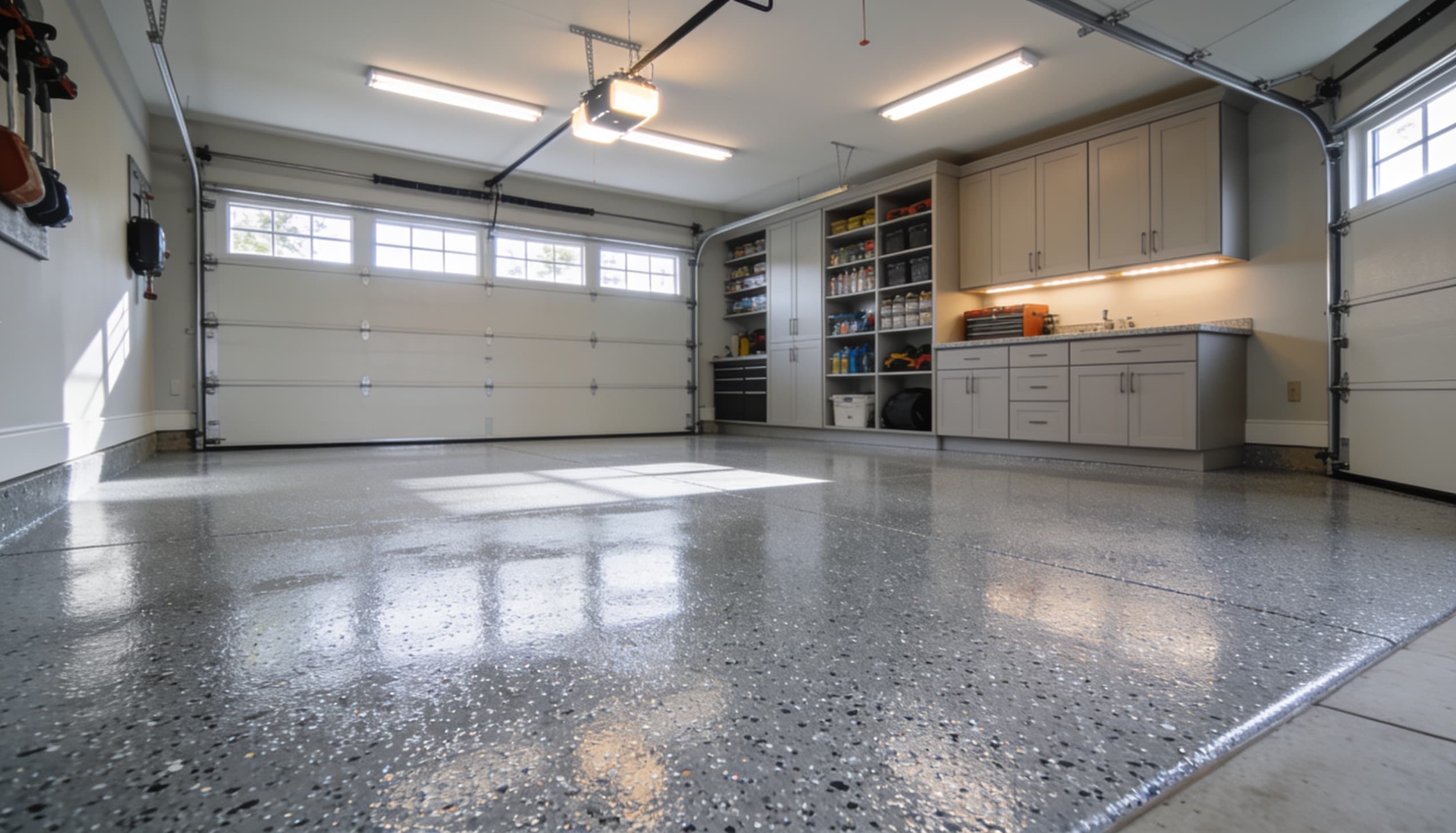
Epoxy for a permanent floor; tile for a temporary one. A professionally installed epoxy system in Charlotte costs $2,500–$4,000 for a two-car garage and lasts 10–15 years as one bonded, seamless surface. Interlocking tiles cost $900–$2,700 in materials, install in an afternoon, and last 5–10 years — but they float on the slab, which means seams, trapped moisture, and movement under vehicle loads.
Epoxy vs Garage Tile — Side by Side
| Epoxy Coating | Interlocking Tile | |
|---|---|---|
| Cost (450 sqft, 2-car) | $2,500–$4,000 installed | $900–$2,700 material, DIY |
| Cost per sqft | $5–$8 installed | $2–$6 supplied |
| Install time | 1–2 days + cure | 3–6 hours, no cure |
| Lifespan | 10–15 years | 5–10 years |
| Bonded to slab | Yes — one surface | No — floats on top |
| Seams | None | Every 12–24 inches |
| Moisture under floor | Sealed out | Can collect and condense |
| Hides slab cracks | Repairs them first | Bridges over them |
| Chemical resistance | High — wipes clean | Varies; seeps at seams |
| Removable / portable | No | Yes |
| Repair a damaged area | Patch and blend | Swap the tile |
Charlotte metro pricing, USD. Epoxy figures are for a professionally installed full flake system including diamond grinding and topcoat. Tile figures are material only, DIY install.
Cost Over 15 Years — 450 sqft Charlotte Garage
Interlocking Tile
Initial: $900–$2,700
Replacement at year 7: $900–$2,700
Damaged tile swaps: $150–$400
15-yr total: $1,950–$5,800
Flake Epoxy System
Install: $2,500–$4,000
Optional topcoat refresh yr 12: $700–$1,100
Maintenance: sweeping
15-yr total: $2,500–$5,100
Over fifteen years the two converge — the coating is more expensive on day one and roughly equal or cheaper by the end, while giving you a better floor throughout. The gap widens further if your slab has any moisture activity, because tiles do not solve that and a coating with a proper primer does. See the full Charlotte cost guide for system-by-system numbers.
Where Epoxy Wins
Nothing gets underneath
A bonded coating has no gap. Water, dust, and debris cannot migrate below the surface, which is the structural weakness of any floating floor in a garage.
Vehicle loads
Jack stands, floor jacks, and a loaded trailer tongue concentrate weight on a few square inches. A bonded coating transfers that straight into the slab. Tiles can crack or deform at point loads.
Cleaning
A seamless floor squeegees and mops in one pass. Tile seams collect grit, and any liquid that reaches a seam ends up under the floor where you cannot reach it.
Charlotte humidity
Our clay soils hold water against foundations for weeks after spring rain. A sealed coating manages vapour; a floating tile system gives it somewhere to condense.
Long-term cost
At 10–15 years of service versus 5–10, the coating usually wins on cost per year even though it costs more on day one.
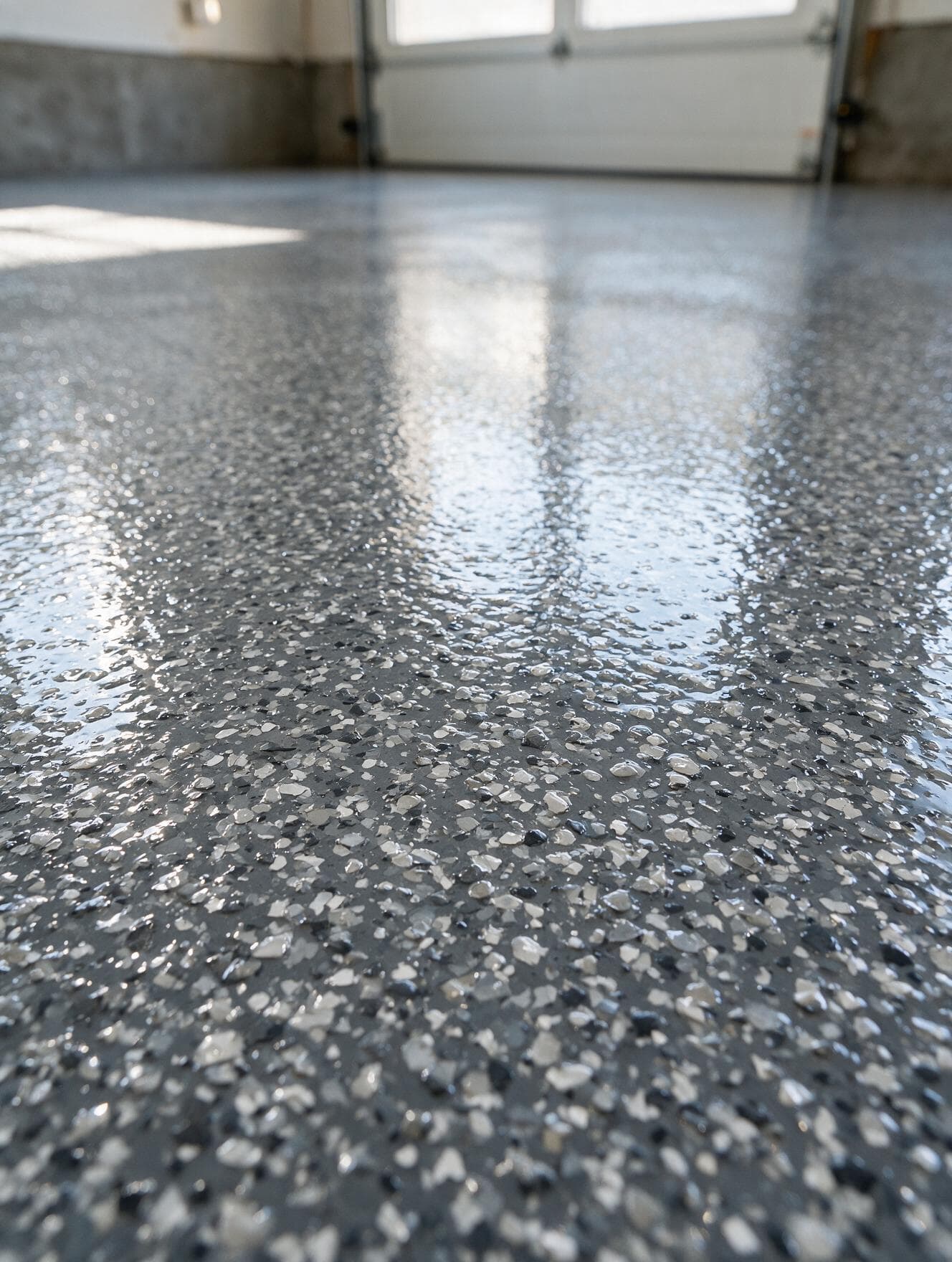
Floor level on a bonded flake system — the chips sit in the coating, and the coating sits in the concrete. Nothing floats on top.
Where Tile Genuinely Wins
Speed
A two-car garage can be tiled in an afternoon with no cure time and no vehicle displacement. Nothing else comes close on turnaround.
Renting or moving
Tiles lift out and come with you. For a rental or a home you expect to leave within a couple of years, that portability is a real advantage.
Bad slab, no budget for repair
If the concrete is badly cracked and repair is not in the budget right now, tiles cover it without prep work.
Trial before committing
Some homeowners tile first, live with the space, then coat properly during a later renovation. That is a reasonable sequence.
Spot damage
Drop something heavy and you replace one tile rather than blending a patch.
The Charlotte Factor: Humidity and Hot Tyres
Two local conditions shift this comparison more than the spec sheets suggest. The first is humidity. Charlotte summers run humid, and our clay soils hold water against foundations for weeks after heavy rain. Anything that floats on top of a slab creates a still-air gap where vapour condenses. When we pull tile out of Charlotte garages, the underside is frequently damp and the slab beneath is darker than the surrounding concrete. A bonded coating removes that gap entirely.
The second is heat. A car that has been driven on Charlotte asphalt in August parks with tyres well above ambient temperature. Cheap flexible PVC tiles can take a set where the tyre rests. Thin DIY epoxy kits fail the same test through hot-tyre pickup, where the coating bonds to the tyre and lifts off the floor. A professionally installed polyaspartic topcoat is formulated specifically to resist this, which is one of the clearest arguments for professional installation over either of the budget routes.
The Verdict
If this is your home and you plan to stay, coat the floor. You get a permanent, sealed, seamless surface that handles everything a garage does to a floor, and the cost per year of service ends up comparable to tile anyway.
If you are renting, moving inside two years, or your slab needs repair work you cannot fund right now, tiles are a legitimate answer rather than a compromise. They are fast, portable, and they cover a bad slab without prep. Just go in knowing what you are buying: a floor covering, not a floor.
Have tile down already and want to know what a coated floor would cost? We remove existing tile, assess the slab underneath, and quote the coating in one visit. Free across the Charlotte metro.
Get Free EstimateFrequently Asked Questions
Related Guides
Share this guide: