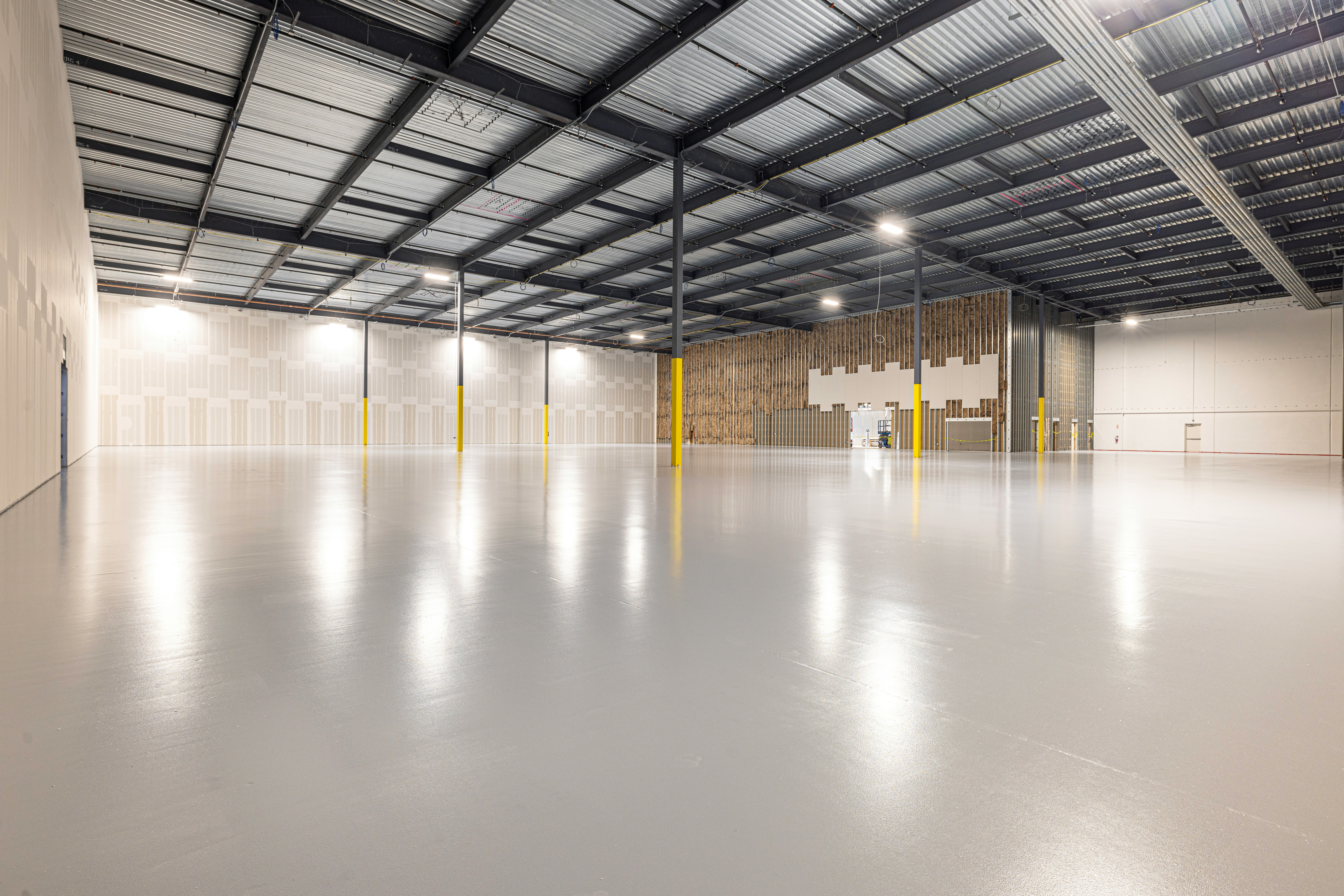
Warehouse Floor
Coatings in
Charlotte, NC
Forklift-rated industrial epoxy and polyaspartic systems for warehouses, distribution centres, and manufacturing facilities across Charlotte. Volume pricing, minimal downtime, OSHA-compliant safety markings.
Industrial Floor Coatings
Built for Charlotte's Warehouse Market
Charlotte has become one of the Southeast's most active industrial real estate markets. The region's position at the intersection of I-85 and I-77, combined with proximity to Charlotte Douglas International Airport, has driven significant warehouse and distribution centre development across Mecklenburg, Cabarrus, and Iredell counties.
We've been a preferred warehouse floor coating contractor in this market since 2012. In that time we've coated facilities ranging from 5,000 sq ft light industrial units to 100,000+ sq ft distribution centres — always to commercial specification, always with the prep quality that prevents early failure.
Warehouse epoxy is not the same as residential garage epoxy. The system must be engineered for the traffic type, load spec, and chemical exposure of the specific facility. We get that specification right before a single coat goes down.
Surface preparation on industrial projects is done with ride-on shot blasting equipment — not walk-behind grinders that would take days on a 50,000 sq ft facility. Shot blasting creates a consistent CSP 3–5 profile across the entire floor, which is what industrial system adhesion requires.
We work with your operations team to build a phasing plan before the job starts. Sections are coated, cured, and returned to service in sequence — keeping product moving and equipment running throughout the project. For facilities that can't tolerate phased downtime, our polyaspartic fast-cure system allows section turnaround in 12–18 hours.
Every industrial installation includes a written maintenance plan. We specify the right cleaning equipment, cleaning frequency, and topcoat renewal schedule based on your traffic volume and chemical exposure. A well-maintained industrial epoxy floor lasts 10–15 years in high-traffic conditions.
Choose Your Industrial System
Specified by traffic load, chemical exposure, and downtime tolerance — not by price alone.
Standard Industrial Epoxy
High-solids epoxy system suitable for light to medium forklift traffic. Chemical resistant, dust-proof, and significantly easier to clean than unsealed concrete. Ideal for storage warehouses and light distribution.
- Forklift rated (light–medium)
- Chemical & dust resistant
- Basic safety markings included
- Fast scheduling
Heavy-Duty Industrial Epoxy
Thicker build system with hardener-dense topcoat for heavy forklift and pallet jack traffic. Resists tyre marks, petroleum products, and repeated cleaning with industrial degreasers.
- Heavy forklift rated
- Tyre mark resistant
- Full safety marking package
- Aisle striping included
Polyaspartic Fast-Cure
Same-day cure system for warehouses that can't afford multi-day downtime. Sections can be coated, cured, and returned to service in 12–18 hours. Full-facility projects completed in phases over a weekend.
- 12–18 hr return to service
- Phase coating — minimal downtime
- UV stable — no yellowing
- 100% solids polyaspartic
What a Sealed Floor
Does for Your Facility
Bare concrete is the single most common floor in Charlotte warehouses — and the least appropriate for modern distribution and manufacturing operations. Here's why coated facilities outperform unsealed ones.
Forklift rated
High-build systems engineered for pneumatic and polyurethane tyre forklift traffic at rated loads — not residential-grade coatings applied at half the spec thickness.
Dust-proof surface
Sealed epoxy eliminates concrete dusting — the fine particulate that contaminates products, clogs equipment, and creates housekeeping overhead on bare concrete floors.
Chemical resistance
Petroleum products, hydraulic fluid, battery acid, and industrial cleaning chemicals bead up on the surface instead of penetrating the slab.
Safety compliance
OSHA-compliant aisle markings, pedestrian zones, hazard areas, and equipment storage zones applied to your facility's safety plan.
Minimal downtime
We phase large projects to keep operations running. Polyaspartic systems return sections to service in 12–18 hours. Full-facility coating over a weekend is achievable.
Volume pricing
Projects over 5,000 sq ft receive volume pricing. 20,000+ sq ft qualifies for our best commercial rate. We regularly coat facilities from 10,000 to 100,000 sq ft.
How We Handle Industrial Projects
Built around your facility's operating schedule — from phasing plan to final handover.
Facility Assessment & Phasing Plan
We walk the facility, assess the slab condition, identify contamination, and build a phasing plan that keeps your operation running. We coordinate with your facility manager to establish work windows that minimise impact.
Industrial Surface Prep
Ride-on shot blasting for large areas, walk-behind grinding for tight spaces and edges. We remove all surface contamination, open the pore structure, and create a CSP 3–5 profile for maximum adhesion at industrial system thicknesses.
Crack & Joint Treatment
Control joints are routed, cleaned, and filled with semi-rigid polyurea filler that accommodates slab movement without cracking. Expansion joints are treated separately. All repairs are flush with the field before coating.
Industrial System Application
Primer, base coat, and topcoat applied at full spec thickness using industrial squeegees and back-rollers. On large projects, multiple crews work simultaneously in coordinated sections to maintain schedule.
Safety Markings & Line Striping
OSHA aisle markings, pedestrian walkways, forklift zones, equipment storage areas, and hazard designations applied using epoxy traffic paint — not tape or conventional paint that wears through under tyre traffic.
Quality Inspection & Handover
Adhesion testing, mil thickness verification, and full facility walkthrough with your facility manager. We provide a maintenance guide and warranty documentation before we leave the site.
What Our Industrial Clients Say
“They coated our entire 45,000 sq ft distribution centre over two weekends. Zero downtime during the week. The floor is immaculate and the safety markings have held up perfectly under constant forklift traffic.”
“Used them for three of our Charlotte-area facilities now. Consistent quality, competitive volume pricing, and they always hit the schedule. That's all we ask.”
“The concrete in our warehouse was in rough shape — oil contamination, cracks, the lot. They prepped it correctly and the epoxy has been down for two years without a single issue.”
Common Questions
Large facility? Contact us for an on-site assessment — industrial projects require a site visit before we can quote accurately.
How much does warehouse floor coating cost in Charlotte?
Warehouse epoxy flooring in Charlotte runs $2–$6 per square foot depending on system and slab condition. Standard industrial epoxy is $2–$3.50/sq ft. Heavy-duty systems run $3.50–$5. Polyaspartic fast-cure systems run $4–$6. Volume pricing applies over 5,000 sq ft. We provide written per-sq-ft quotes after a site visit — not phone estimates.
How long does a warehouse floor coating take?
A 10,000 sq ft warehouse typically takes 3–5 days with a full crew. We phase projects to keep operations running — coating sections overnight or on weekends, returning them to service before the next shift. Polyaspartic systems allow 12–18 hour section turnaround. Full-facility projects up to 50,000 sq ft can be completed over a weekend with multiple crews.
Can epoxy floors handle forklift traffic?
Yes — with the right specification. Our heavy-duty industrial systems are engineered for forklift loads on both pneumatic and solid polyurethane tyres. The key is build thickness (100+ mil) and a hardener-dense topcoat rated for the traffic type. We always confirm your equipment specs before selecting the system.
Can you coat a warehouse floor with oil contamination?
Yes, with proper prep. Oil-contaminated concrete requires additional surface preparation — grinding or shot blasting to remove contaminated material, followed by a degreaser treatment and moisture testing. We never coat over contamination — it's the most common reason industrial epoxy fails. All contamination is addressed before a single coat goes down.
Do you offer OSHA-compliant safety markings?
Yes. OSHA aisle markings, pedestrian walkways, forklift zones, equipment storage areas, and hazard designations are standard on industrial projects. We use epoxy traffic paint applied over the cured floor system — not adhesive tape or brush-applied paint that degrades under tyre traffic. Colours and widths are per your facility's safety plan or OSHA standard where no plan exists.
What's the minimum warehouse project size you take on?
Our minimum invoice for industrial work is $3,500. Most warehouse projects are significantly larger. For facilities under 3,000 sq ft, our commercial epoxy flooring team handles the project under the same spec and warranty terms.
Do you work with property managers and industrial developers?
Yes. We are a preferred flooring contractor for several industrial property managers and developers active in the Charlotte market. We offer standardised specs, priority scheduling, and volume pricing for ongoing work. Contact us to discuss a preferred contractor arrangement.
How do you maintain an industrial epoxy floor?
Auto-scrubber with neutral pH cleaner for routine maintenance. Industrial degreaser for heavy contamination. Inspect and patch spot wear every 2–3 years in high-traffic aisle areas. A fresh topcoat every 5–8 years maintains full protection in high-traffic facilities. We provide a detailed maintenance guide with every industrial installation.
Service Area
Industrial and warehouse floor coatings across the Charlotte metro — Mecklenburg, Union, Cabarrus, Iredell, and York counties.
Ready to Discuss Your
Facility Project?
Free on-site assessment, written proposal, and phasing plan built around your operating schedule. Volume pricing available for large facilities.